IT'S XIAOTIME!

Naglilingkod sa Diyos at sa Bayan sa pagtuturo ng Kasaysayan

Category: Uncategorized

1983 ULIT

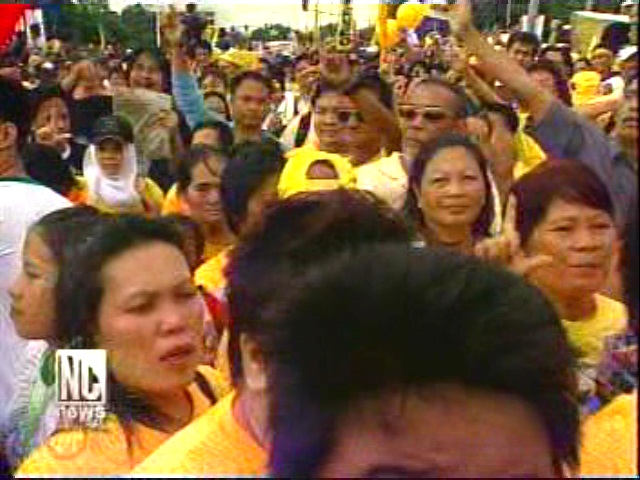
Si Xiao Chua (may hawak ng dyaryo, sa kaliwa) kasama ang ilang kaibigan sa funeral march para kay Cory Aquino, 5 Agosto 2009 (Sa kagandahang loob ng Studio 23)

Ang mga sumusunod ay isang pagmumuni-muni ng isang batang historyador, isang guro ng kasaysayan sa Pamantasang De La Salle Maynila, Pangalawang Pangulo ng Philippine Historical Association, at isang 25-taong gulang na batang Tarlakin sa kanyang pagtapak sa kasaysayan bilang nakibahagi sa paghahatid ng bayan kay Tita Cory noong 5 Agosto 2009.  Unang nailathala sa pahayagang Mabuhay:  Lingguhang Pilipino Mula Pa Noong 1980, 7-13 Agosto 2009, 5, 6:


 “They came to me with one cry—DEMOCRACY.”

-Cory Aquino

Lagi kong sinasabi na nagsisisi ako na hindi pa ako naipanganak upang makimartsa para sa libing ni Ninoy Aquino noong 31 Agosto 1983 kung saan dalawang milyong tao ang nakipaglibing (mas malaki pa kaysa kay Mahatma Gandhi).  Nagsisisi rin ako na masyado pa akong bata para sumama sa Kapangyarihang Bayan sa EDSA noong Pebrero 1986 kung saan dalawang milyon din ang masayang nakibaka para sa demokrasya sa kabila ng panganib.  Naging panalangin ko na sana malasap ko man lang kahit kaunti ang karanasang “People Power.”

Hindi ko inaasahan na matutupad ito noong 5 Agosto 2009, sa paghahatid sa huling hantungan sa dating pangulong Maria Corazon Sumulong Cojuangco Aquino.

Nagsimula ang araw ko bilang isang panauhin sa Umagang Kay Ganda sa ABS-CBN 2.  Kinapanayam ako ni Winnie Cordero ukol sa aking pangongolekta ng Cory at Ninoy memorabilia sa kabila nang hindi pa ako naipapanganak nang mapaslang si Ninoy.  Doon ko ipinakita na bata pa lamang ako, inspirasyon na sa akin si Tita Cory.  Na simula nang mamatay si Tita Cory ay disoriented ako at kulang sa tulog kaya kailangan kong pumila ng tatlong oras sa La Salle Greenhills (kasama sina Tita Honey at Ivana Guevara) upang masulyapan siya kahit sandali noong madaling araw ng 3 Agosto.  Bumata siya ng tatlumpung taon at napakapayapa ng kanyang mukha.  Naikwento ko rin ang aking pakikiramay sa dalawa niyang anak, si Noynoy at Pinky at ang pagkabuhay ng aking diwa nang makita ko ang libo-libong tao sa telebisyon ilang oras ang nakalipas sa paglilipat sa kanyang mga labi patungong Katedral ng Maynila.  Na liban sa pagpapanatili ng demokrasya, ang kanyang pangunahing kontribusyon sa atin ay ang pagbabalik ng tiwala ng Pilipino sa kanyang sarili.

Sa mga nakaraang taon akala ko, nakalimutan na siya.  Kakaunti na lamang ang dumidinig sa kanya sa tuwing nagpapatawag siya ng suporta laban sa mga pagbabanta sa demokrasya bagama’t nananatili siyang tinitingala.  Sa isa sa kanyang mga huling text message, nadama niyang sa kanyang karamdaman, nag-iisa lamang siya sa pananalangin para sa bayan.  Hindi ko inaasahan ang mga sumunod kong makikita.

Sa paghatid sa akin sa Katedral, nakita kong may iilan nang tao ang naroroon.  Kasama ko sa bandang COMELEC sina Ayshia Kunting at Kerby Alvarez, mga kasama sa UP Lipunang Pangkasaysayan. Ang huli ay may tiket sana sa loob ng Katedral ngunit sia ay nahuli kaya hindi na nakapasok.  Halos maluha na siya dahil doon.  Nakita namin ang galaw ng bayan.  May mga nabigyan ng trabaho dahil sa pagkamatay ni Tita Cory, nagbebenta ng samu’t saring mga pins (Php 20.00), mga t-shirt (Php 100.00), mga dilaw na laso (Php 20.00) at mga payong (Php 120.00).  Ang mga VIP na dumadaan ay maayos na pinapapasok, tumabi nang magmartsa ang militar.  Bagama’t tumili nang  makita si Piolo Pascual at iba pang mga artista, sa mga bulong-bulungan, hindi si Kris Aquino o James Yap ang kanilang ipinunta doon kundi ang magpasalamat kay Tita Cory.  Alam ng bayan kung bakit sila nandoon.

Nagsimula ang misa ng 9:00 NU, hindi namin naririnig sa labas ang mga nangyayari sa loob.

Nang mamatay si Tita Cory, makulimlim ang langit.  Nang saluduhan ang labi niya sa LSGH ng militar biglang umulan, at tumigil matapos ang pagsaludo.  Nang pumuwesto kami malapit sa Ayuntamiento, umulan muli nang malakas.  Nabasa ang ilang libro ko sa loob ng aking bag pero ayos lang.  Nakita kong hindi natinag ang bayan.  Kahit may mga payong, kami ay nabasa, pero ok lang.  Bahagi kami ng kasaysayan, at para ito kay Tita Cory.  Noong 1983, sa paghahatid kay Ninoy, ang ulan at baha ay hindi pumigil sa mga tao.

Sa wakas, narinig namin ang pasasalamat at pamamaalam ni Kris Aquino, napaluha kami.  Wika niya sa mamamayang Pilipino, hiniram ang mga kataga ng kanyang bayaning ama, “You have given our family honor beyond anything we could ever have hoped to receive, that no matter how great the sacrifices of my parents, I can honestly say to all of you that for my family, the Filipinos are worth it….  Paano po ba kami makakapagpasalamat sa inyong lahat sa effort ninyong pumila sa gitna ng matinding init at malakas na pagbuhos ng ulan para po masulyapan ang mommy namin, magbigay respeto at maipagdasal siya sa huling pagkakataon?”  Ngunit pinalakpakan ng lahat ang kanyang deklarasyon na ipagpatuloy ang laban ng kanilang ama’t ina, “Noy, ikaw at ako ang nasa posisyon para ipagpatuloy ang lahat ng kanilang nasimulan.”  Bumuhos lalo ang emosyon sa pagsabay namin kay Lea Salonga sa pag-awit ng “Bayan Ko.”

Sa mga oras na iyon, nakita naman namin na gumagawa ng pelikula ang Kapampangan na si Brillante Mendoza, unang Pilipinong nagwagi bilang pinakamahusay na direktor sa Cannes Film Festival ngayong taon, ukol sa isang batang mahirap sa gitna ng pagluluksa ng bayan ay hindi pinapansin ng mga tao.  Siyempre todo “acting” naman ako sa kanyang pagdaan, kino-Coree ko lang yung bata.

Inaasahan ko na motorcade lamang ang mangyayari.  Nang makausap ko si Margie Juico, dating sekretarya ni Tita Cory, masyadong malayo ang Manila Memorial kung martsa ang gagawin.  Nakita ko na sa pagtatapos ng misa, kinordonan na ng pulis ang mga tao.

Sa paglabas ni Tita Cory ng Katedral mga bandang 11:45 NU, tumigil ang tubig-ulan.  Napalitan nang pag-ulan ng confetti mula sa helikopter, at sa taas ng Katedral at Palacio del Gobernador.

Nagsigawan ng “Coree!  Coree!” at ginawa ng bayan ang Laban sign sa kamay sa pagdaan ni Tita Cory sa kanilang harapan.  Nagsimula na ang kalbaryo at kagitingan ng apat na honor guard—Navy Petty Officer 2 Edgardo Rodriguez, Army Pfc. Antonio Cadiente, Airman 2nd Class Gener Laguindan, at Police Officer 1 Danilo Malab, Jr., na inasahan na dalawang oras lamang tatayo at hindi gagalaw.  Sa kanilang pagtayo ng siyam na oras, nagbigay sila ng malaking karangalan, hindi lamang sa kanilang dating commander-in-chief, kundi sa kanilang uniporme na rin.

Nang makadaan ang coaster ng pamilya Aquino, nakakapangilabot ang aking nakita.  Hindi na napigilan ng mga awtoridad ang pagsunod ng mga tao sa prusisyon.  Nais samahan ng bayan si Tita Cory at ang kanyang pamilya sa huling sandali.  Sumama na rin kaming tatlo sa paglakad.  Ang aming mga kasama, isinisigaw ang pangalan ni Tita Cory.  Sumasagot ang mga taong nakatayo sa tabi ng kalsada.  Mga matatanda, maging ang mga bata.  May mga gawa sa bahay na mga plakard na nagpapasalamat sa dating pangulo.  Nang makarating ako sa Anda Circle at sa A. Bonifacio Drive, sa paglingon ko sa likod, ang daming taong nakasunod, isang dagat ng dilaw.  Dilaw ang kulay ni Tita Cory, ang bagong pula, ang bagong kulay ng kagitingan at kalayaan.

Naluha ako.  Lagi kong sinasabing ang nakararaming Pilipino ay wala nang pakialam sa bansa, na nakalimutan na nilang magtiwala sa kanilang sarili.  Ngunit sa sandaling iyon, nakita ko na ang dami pa palang nagmamahal sa bansa natin. Hindi pa pala namatay ang diwa ng Kapangyarihang Bayan sa atin, natutulog lang pala ito.  Nakita kong natuwa si Kerby na kasama niya ang bayan sa mga oras na iyon.  Hindi hamak na mas matindi ang pagpupugay sa labas ng Katedral kaysa ng mga elit na nasa loob.

Nakita ko ang aming punong-lungsod sa Tarlac, Alkalde Aro Mendoza, na pinangunahan ang batalyon ng mga bus ng mga cabalen namin ni Tita Cory.  Kasama naming lumalakad ang mga inspirasyon ng bayan sa ngayon, si Gobernador Among Ed Panlilio ng Pampanga, at si Jun Lozada, na nagbigay ng maikling panahon upang makipagkwentuhan sa akin.

Napaka-cute ng mga bata na sumisigaw ng “Coree!”  Isinigaw ko bilang palaala sa kanila, “1983 ulit!” habang hawak-hawak ang dala-dala kong Mr. and Ms. Special Edition, “Ulitin natin ang kasaysayan!”  Noong 1983, sa kabila ng pagkukubli ng medyang pambalana na maka-Marcos noon sa pagbabalitang may isang namatay dahil tinamaan ng kidlat, ang Mr. and Ms. Special Edition, at ang pahayagang Mabuhay ang nagpakita ng mga larawan na milyon-milyong tao ang nakipaglibing kay Ninoy.

May mga ilang nakakilala sa akin dahil napanood nila ako noong umaga at binati ako ng masaya at nakipagkodakan pa.  Nakapanayam pa ako ng maikli sa Newswatch ng RPN-9 kung saan sinabi ko na kahalintulad noong 1983, walang nag-organisa at spontaneous ang kilos ng mga tao noong araw na iyon.

Mayroon lang isang presidentiable na kinamayan ang mga tao habang nasa loob ng kanyang kotse, tahasang inaagaw ang atensyon na para lang sana kay Tita Cory.  Mayroong sumigaw, “Bawal mangampanya dito !” “Lumakad ka!”

Hindi natinag ang mga tao sa kabila ng lakas ng alon sa Look ng Maynila.  Liban sa mga bayaning bumberong nakalinya upang magpugay sa isang Dakilang Pilipina, naroroon ang mga magkakapamilya, magkakaibigan, magkakaklase na nakalinya sa daan.  Sa bawat pagsigaw ko sa kanila ng “Tuloy ang Laban!” habang itinataas ang Laban sign, sumasagot sila, at nakikita ko ang kanilang mga mata, puno ng pagmamahal sa bayan.  Naramdaman ko ang pagtanggap nila sa akin bilang kababayan.  Mga kapatid ko sila.  Nalasap ko rin sa wakas ang diwa ng EDSA, na nasasalamin sa mga kataga ng awitin ni Jim Paredes, “Kay sarap palang maging Pilipino,” “Naging langit itong bahagi ng mundo!”

Hindi matatapatan ng mga karaniwang rally ang aking naranasan.  Sa mga pagkilos man ng kaliwa o kanan, kadalasa’y galit at hinaing ang kanilang ipinapakita.  Noong 1983, pinagsamang galit sa diktadura at pagmamahal sa bayan ang nakita.  Sa mga sandaling iyon sa libing ni Tita Cory, pagmamahal sa bayan at pasasalamat kay Tita Cory ang nasa mga mata ng mga tao.  Hindi sapat ang makita ito sa telebisyon.  Nakita at nadama ko ang katotohanan ng mga damdaming ito nang samahan ko ang bayan noong araw na iyon.

Lumakad pa kami hanggang sa Quirino-Taft.  Bagama’t ang itaas na kalahati ng aking katawan ay nalulunod sa pagmamahal ng bayan at gusto pang sumama, dinama ko ang aking mga tuhod at pagod na ang mga ito.  Nagpasya kaming kumalas sa prusisyon mga 2:00 NH.  Pero pauwi sakay sa bus, nagpakita kami ng Laban sign, tinitingnan namin kung may sasagot sa amin tulad kanina, isa man lang masaya na kami.  Liban sa isa na nagbigay sa amin ng gitnang daliri, sampu ang sumagot sa amin ng Laban!  Ito ang aming simbolikong paraan upang ipaalala sa aming sarili na baon namin pauwi ang laban nina Ninoy at Cory.

Samantala, sa telebisyon na namin nasundan ang pagpapatuloy ng paghahatid kay Tita Cory sa huling hantungan, hanggang matapos ang 22.8 kilometro mula Katedral ng Maynila, dumating ang mga labi ng dating pangulo sa Manila Memorial Park.  Nais ng pamilya Aquino na maging pribado ang paglilibing.  Ngunit nais ng taumbayan na ihatid ang kanilang Tita Cory hanggang sa huli.

Mas malayo ang distansya ng prusisyon ng dalawang milyong katao para kay Ninoy noong 1983 mula sa Simbahan ng Sto. Domingo sa Lungsod Quezon, 12 oras ang inabot.  Sa halos kalahati ng distansya mula Katedral ng Maynila (kung saan mga matataas na kaparian lamang ang ibinuburol), ang prusisyon ng 300,000 tao ay umabot na nang 9 na oras.  Higit pa ito sa karangalan ng isang state funeral (na gagastusan sana ng pamahalaan).  Ayon kay Manolo Quezon, ang desisyon ng pamilya ay konsistent sa buhay ni Tita Cory na hindi ninais ang kahit anong karangyaan at karangalan na inasam-asam ng iba, “But as Cory Aquino lived, so she remains in death: having accepted only the barest minimum in terms of the honors of state, because she only held the position to accomplish the transition back to democracy, and doing so with a scrupulous regard not to burden the public purse with fuss over her person. / For Cory,  the presidency had always been a means to an end, not a means in itself; so it is truly fitting she will be laid to rest with nothing more than what she’d started out with, as a widow: a nation by her side, united in grief, and in a manner that ultimately manifests the power of the people and not of whoever happens to comprise today’s officialdom.”

Sa ganap na 8:35 NG, humimlay sa pagmamahal ng kanyang pamilya at mga kababayan ang unang inang pangulo ng Pilipinas, muling nakatabi ang kaisa-isang lalaking kanyang minahal, si Ninoy.

Nang hapon na iyon, ako ay dinala sa ABS-CBN upang kapanayamin para sa programang Y-Speak.  Doon aking sinabi, “She may not be the best president, but she did her best as president.”  Si Tita Cory mismo ang nagsabi sa kanyang huling State of the Nation Address noong 1991, “I hope that history will judge me as favorably as our people still regard me, because, as God is my witness, I honestly did the best I could. No more can be asked of any man.”

Sa pagkamatay ni Tita Cory, bagama’t inaalala natin ang kanyang pangunahing papel sa kasaysayan ng Pilipinas bilang Ina ng Demokrasya, hindi ibig sabihin na kinakalimutan natin ang kanyang mga naging pagkukulang, sapagkat dapat itong gawing balon ng aral.  Bagama’t hindi nabahiran ng alegasyon ng personal na pangungurakot, hindi siya naligtas sa kontrobersya:  ang hindi pagpapatupad ng CARP sa sariling lupa ng kanilang pamilya sa Tarlac, ang trahedya ng pagbaril sa mga magsasaka sa Mendiola noong 1987 (na sinasabi ng administrasyong Aquino na may nanggulo kaya nangyari), ang tinatawag na “Kamag-anak, Inc.,” ang pagmamalabis ng ilan sa mga kasapi ng itinaguyod niyang civilian defense, ang pagsang-ayon sa pananatili ng mga base militar ng Estados Unidos sa bansa.

Ayon pa sa mga kritiko, hindi naman daw siya naging instrumental sa pagbabalik ng demokrasya, sa halip nagtago sa isang kumbento sa Cebu kasama ng mga Pink Sisters nang sumiklab ang Kapangyarihang Bayan noong 22 Pebrero 1986.  Hindi nalalaman na bumalik siya kinabukasan sa Maynila at sakay ng isang kotse, naglakbay pa sa kalagitnaan ng mga tangke ng diktadura.  Hindi rin siya nagpapigil na magsalita sa harapan ng gusali ng POEA upang samahan ang mga tao.  Bagama’t sina Min. Juan Ponce Enrile, Hen. Fidel Ramos, Butz Aquino at Jaime Cardinal Sin ang naging tagapanguna ng Kapangyarihang Bayan sa EDSA, ang damdamin ng mga mamamayan ay naihanda na ni Tita Cory nang magpatawag ito ng boykot ilang araw ang lumipas, at muntik nang bumagsak ang ekonomiya bilang pakikibaka laban sa diktadura.  Tulad ni Rizal na inspirasyon nina Bonifacio at ng Himagsikang 1896, si Tita Cory ang inspirasyon ng Kapangyarihang Bayan noong 1986, ang isinigaw ng bayan upang pamunuan sila.

Maging ang hindi paghingi ng bansa ng debt moratorium o debt repudiation na nagpanatili ng utang ng diktadura para ating bayaran ay isinisisi ng mga kritiko kay Tita Cory.  Kung alam lamang nila na dahil dito napanatili ang ating dangal sa harap ng mundo, na nagtiwala siya sa mga Pilipino na muli nilang itatanghal ang kanilang bansa upang maging dakila ito at mababayaran din natin ang ating mga utang.  Mukhang ang dapat itanong ay hindi kung binigo ba tayo ni Tita Cory kundi, “Binigo ba natin siya at ang ating mga sarili?”

Ayon nga sa isang panayam na ibinigay niya sa Philippine Star noong 2007, “People used to compare me to the ideal president, but he doesn’t exist and never existed. He has never lived.”

Hindi santa si Tita Cory, bagama’t madasalin siya, alam kong sa kanyang kababaang loob hindi niya tatanggapin na dakilain siya bilang ganoon.  Sa aking opinyon, hindi rin siya pambansang bayani tulad nina Rizal at Bonifacio na namatay para sa bayan, ngunit bayani siya tulad ng lahat ng nabubuhay para sa bayan ay bayani.  Halimbawa na maging ang mga pinakasimple sa atin ay maaaring maging bayani.  Hindi siya perpekto, ngunit ang kanyang puso ay nasa tamang lugar sa panahon ng mga mahihirap na pagpapasya.  Ito ang nakita ng mga tao.  Ang gusto nating gunitain ay ang mga sakripisyo na ibinigay ni Tita Cory para sa bayan—ang kanyang asawa, at ang kanyang buhay; ang kanyang determinasyong mistulang bakal laban sa siyam na bantang coup d’etat na nagpanganib sa ating demokrasya (Maging ang isa sa mga nanguna sa mga pagtatangkang ito na si Comm. Rex Robles ay mangiyak-ngiyak pang humingi ng tawad at inalala ang katapangan ng babaeng pangulo); at ang pagbabalik ng mga institusyong demokratiko—ang kongreso, ang malayang korte, malayang pamamahayag, nagsasariling pulisya, ang Saligang Batas ng 1987; at marami pang ibang mga tagumpay, sa kabila ng mga panggugulo, lindol, bagyo, at pagsabog ng Bundok Pinatubo.  Pinatunayan niyang wala nga siyang alam tulad ng ipinaratang sa kanya, “I admit that I have had no experience in cheating, stealing, lying or assassinating political opponents!”  Modelo sa bawat lingkod-bayan at kawani.

Ang ibinigay na parangal ng militar, pagpapaputok ng kanyon sa mga kampo ay isang vindication sa ginawang pang-aapi ng instutusyong militar sa kaniya at kay Ninoy noong Batas Militar.

Kapag namamatay ang isang sikat na tao, ginugunita ang mga magagandang bagay lamang ukol sa namatay, ngunit kadalasa’y hindi pag-aaksayahan ng labis na panahon ng mamamayan.  Ang mahabang pamamaalam ng bayan, ang mga taong lumabas sa kalsada, at nagpupugay sa buong daigdig ng Cyberspace, ay nagpapatunay na sa lahat ng kanyang nagawa, ang naaalala natin ay ang maybahay na pinakiusapan nating pamunuan tayo.  Kinailangan natin siya, at dininig/tinanggap naman niya ang mabigat na pakiusap na ito.  Ayon sa kanyang talumpati sa Kongreso ng Estados Unidos noong 18 Setyembre 1986, “Wherever I went in the campaign, slum area or impoverished village. They came to me with one cry, DEMOCRACY.  Not food although they clearly needed it but DEMOCRACY. Not work, although they surely wanted it but DEMOCRACY. Not money, for they gave what little they had to my campaign. They didn’t expect me to work a miracle that would instantly put food into their mouths, clothes on their back, education in their children and give them work that will put dignity in their lives. But I feel the pressing obligation to respond quickly as the leader of the people so deserving of all these things.”

Kung noong 1983, nagsimulang bumagsak ang diktadura, ang fearless forecast ko ay sa 2009 ay magdudulot, hindi ng pagbagsak ng isang rehimen, kundi nang pagmulat ng Pilipino na pumili ng tamang lider sa 2010, pagpigil nila sa makasariling kilos sa pagbabago ng Saligang Batas, at gawin ang makakaya upang sa sariling paraan, ituloy ang laban nina Ninoy at Cory sa loob ng marami pang taon.

Pero sa aking palagay, ito na ang huling manipestayson ng “People Power” na makikita natin sa mahabang panahon.  Isang lider sa kalibre lamang ni Cory ang makapagbubuklod noon.  Si Tita Cory rin mismo ang nagpahiwatig maraming beses na hindi na dapat maulit ang EDSA.  Dapat hindi tumigil sa ilang araw na pagpapakita ng pag-kakaisa ang mga tao.  Kailangang kumilos para sa totoong “People empowerment.”  Ipinakita ito ni Tita Cory sa pagtataguyod ng micro-finance at edukasyon noong siya ay nabubuhay pa.

Para sa akin, ang tunay na Kapangyarihang Bayan ay magsisimula sa pagbabago ng kalooban tungo sa kaginhawaang inadhika ng ating mga bayani mula Himagsikang 1896, hanggang sa Kapangyarihang Bayan 1986.  Sa pagsisimula nating bigyang kahulugan ang ating pag-iral na mas malaki pa sa ating mga hangarin para sa sarili tulad ng sinabi ni Tita Cory, “I would rather die a meaningful death than to live a meaningless life.”

Nang makapanayam ko siya sa kanyang opisina sa Makati noong 2003, sa kabila ng kanyang pagiging pormal, hindi ko napigilan na sabihin sa kanya na fan niya ako, at dahil sa kanya ipinagmamalaki kong Pilipino ako, na mahal ko siya.  Hindi ako nagsisisi na sinabi ko yun noong buhay pa siya.

Sa paghahatid natin sa kanya sa huling hantungan, muli nating sinasabi sa kanya, “Hindi ka namin iiwan sa laban dahil hindi mo kami iniwan.  Mahal ka namin”

Tuloy ang laban!

11 Agosto 2009, 11:08 NU, Silid 304A, Bulwagang Gokongwei, Pamantasan ng De La Salle sa Maynila
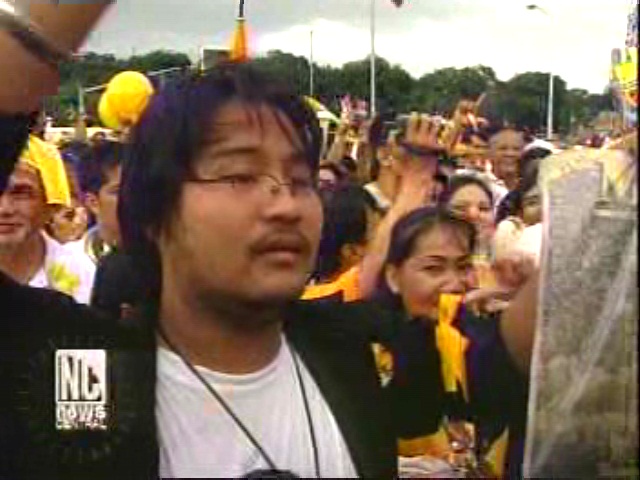
Xiao Chua at Gobernador Ed Panlilio sa Luneta noong funeral march para kay Cory Aquino, 5 Agosto 2009 (Sa kagandahang loob ng Studio 23)

TITA CORY: IN HER OWN WORDS

Image


I want to believe that my enthusiasm for history was due to the fact that my parents saw the passing of Ninoy Aquino’s funeral cortege near Monumento while I was still in my mother’s womb.  But it’s more believable to think that it is because I grew up during the time of the downfall of the dictatorship and the so-called “new democracy.”  This period in our history was embedded in my consciousness because the important events of People Power always played on television.  Because of this, I became a great fan of the president of People Power, carrying her photograph and shouting her name, “Coree! Coree!”.


And then, as a second year student at the University of the Philippines Diliman, I finally got a chance to meet and interview Former Pres. Corazon C. Aquino for our Communication III under Prof. Melanie Moraga-Leaño.  With Henderson Gercio, Bryan Clark Hernandez and Emmalyn Sagum, we interviewed Mrs. Aquino on 12 March 2009 in her office at 7 Floor Jose Cojuangco and Sons Bldg., Dela Rosa St., Makati City.  Excerpts:

Life as Former President

I come to the office everyday.  And meet with people and do my letters here.  …Then I also looked into the other letters and I have to answer, I do my letters myself.

I have been chairperson [of the Benigno S. Aquino, Jr. Foundation] from the very beginning since 1983 and I continue to be that.  We had put up the Aquino Center in Tarlac.  …So the idea first of all was to make sure that people will not forget Ninoy and our very concern, especially after his assassination, that people would get to the truth.  Because in the beginning, the Marcos dictatorship was saying that it was Galman who shot Ninoy, so we want to have everything documented and also the role of People Power in the restoration of democracy…

…Then, after my presidency…well, exactly a year after my presidency, I said that we would like to put up an Aquino Center, so that was in 1993 when I first launched the campaign.  And we’re finally able to inaugurate in 2001, so it took me eight years to go around, to solicit funding and…anyway I’m very happy that I’ve been able to do this, not only for Ninoy’s sake and my sake, but more importantly for our young people to know about our history.  And also, I always tell them that Ninoy was ready to offer his all for the country and it was just not a matter of…of words but he did it, I mean he came back, even though there was much risk to his life, and in fact, he was killed.  But, then for my part I vowed that I would continue his work.  And so, I hope that all of us Filipinos will try to look within ourselves and find out what it is that we are asked to do or we feel we can do for our country.  In other words, I want people to know…nobody’s excused, if you are Filipino, you do something for your country.  You don’t have to die for the country but there are so many things that you can do and you don’t wait for the country.  Kamukha nung kay John F. Kennedy, “Ask not what your country can do for you, but what you can do for your country.”

Learning How To Paint

Well, I started painting in 1996.  I like paintings except I know my limitations.  Anyway, I visited a friend of mine, si Marites Lopez, and she invited me to have a look-see at their painting lesson in her house.  And at that time, they were already two years into painting so, of course, I was saying, “Oh, no way can I join this group…”  They really seem to me as having so much talent but then she said, “No, no.  Our teacher is very patient and he’ll be able to teach you.”  And she was telling me, “Everybody can paint.”  Of course, I wasn’t sure about that.  But anyway, it was my oldest daughter Ballsy who told me, “Mom, go ahead, anyway, with your name your painting will amount to something.”  So I did, and I organized a group …we’re about ten in the beginning.  We’ll have lessons every Wednesdays, 3 hours each time, and we had a young teacher, Jeffrey Consumo, who didn’t even take formal lessons but he was so patient and I think that helped, and very encouraging.  And for my first lesson, I was able to finish a painting in three hours, and I was just so amazed and I was happy.  And so I took lessons from him for three years but since that time, I’ve been doing it on my own and I tried different things.  As I said, I’m lucky I have a name.  But normally, it’s the other way around.  Artists really struggle hard in order to have a name.  So I’m doing it backwards.  Start with the name, and then do the paintings.

…There are days when everything comes easy, and it comes on the way you’d like it too.  But, there are days when you’re not too happy.  But anyway, I’m really grateful to my teacher that because of him, I’ve been able to do these paintings and I give them as gifts, well…first, to the donors of the Aquino Foundation, and then, to people who have everything, like when Pres. Kim Dae Jung was, for his inauguration as president I gave him a painting.  George Schultz who used to be Secretary of State, because he was so good to me when I was president, I gave him a painting when he got married for the second time.  To the Sultan of Brunei, I told him, I know you have everything, you manage a state.  And then he said, “But I don’t have a Cory Aquino painting, yaaah….”  So that made me feel good.  Then, when I’m ninang for weddings, so that’s what I give.  And one of my inaanaks was joking and said, “Can this be retroactive for the time that you have…you were ninang but you didn’t know how to paint yet.  So I said, I have to think about that.

…I like paintings and it’s something that I thought I could never do.  But, apparently, all of us can paint.  Who cares whether it’s a masterpiece or not!

Childhood Dream and Being Private

I wanted to be a teacher.  …It’s just when I got married I knew Ninoy, you know, was aiming for that (the presidency) and that he really loved politics and he was a public person.  I’m really a private person.  I value my privacy, in fact, I still value my privacy.  Once, first, when Ninoy was imprisoned it was a incumbent for me to have a more public stance.

Cory As A Wife

Well, I always say that Ninoy and I were able to bring the best in each other.  And I think that’s all that’s necessary for a married couple:  To try to bring out the best in each other.

Cory As A Mother

Well, you ask my children, I think they’re very happy with the way I brought them.  I certainly spent much time with them and I was a fulltime wife and mother.  Of course there were times that it was boring pero that was my commitment when I got married:  That I vowed that I would be a good wife and mother.

Ninoy

Well anyway, people ask when we first met.  Ok, the earliest I remember was we were both nine years old. You must remember Ninoy and I both came from Tarlac, both the Aquinos and Cojuangcos were and are in politics.  My father was congressman on the first district of Tarlac and Ninoy’s father was congressman of the second district.  It was inevitable that we would meet, in fact, my first cousin, married the older brother of Ninoy, and my father was the Godfather of Lupita Aquino (Kashiwahara).  So, inevitable yon.  We met, I remember it’s the birthday of Ninoy’s father and nung araw fami-familia kung magpunta sa…so my parents took all of us there.  …And that was it, and I didn’t see him again until, because I went to the United States to study when I was 13.  So I didn’t get to see him until I was 16, when we came back for a vacation.

…I have to say before Martial Law, Ninoy’s world was all politics and I really, well, that was the style then, na bahala ang mother.  But Ninoy, I would insist that at least we would go to mass together every Sunday and that we would go out for lunch or dinner at a Chinese restaurant in Chinatown.  Nung araw wala pa itong mga classy Chinese restaurants.  And then we go to a movie with the..with the children.  And then once a year, or twice a year, we go to Hongkong.  So that would be the treat na Ninoy would take all of us and that would be the time that it, would at least have time for each other.

…We enjoyed yung Moonlight Serenade….  It was a Glenn Miller thing, …Miller had an orchestra or a band and it was more for the music rather that for the lyrics that we liked it.  And at that time, nung hindi pa kami kasal and it’s very popular in the Philippines with the Glenn Midler Story had been shown and everytime they play that we really danced to the tune….

Incident With Young Ninoy

Actually, we had come from a movie and, you know, at that time I got my chaperone, so my chaperone was my older sister Josephine.  So we were driving on EDSA, which was Highway 54 before, and this had happened parang two or three months, or maybe a month, after Ninoy had worked for the surrender of Luis Taruc.  So we were on Highway 54 and suddenly there was a jeep coming from the ricefields, on both sides nung araw may ricefields dyan sa Highway 54, just bumped us.  So the car door flew open, my sister was thrown out first and the second, when I fell out.  And my sister, at that time was in fact three months pregnant, she lost her baby.  And so we were taken to the hospital, sa Lourdes Hospital, by an American who had played golf.  Kasi I couldn’t get up and because you know, you’re thrown out and then you just land flat on your back.  Ninoy was not hurt because he was holding on to the wheel.  And so I stayed overnight in the hospital.  Luckily there were no injuries, I mean, no major injuries, but I was black and blue all over and my older brother said, “Cory you have to go to Baguio tomorrow”  because, I was really expected by my parents to go to Baguio but I ask if we could go the following day because my younger sister and I will go to a party.  And, of course with Ninoy I wanted to stay behind for that but of course we’d still to go to the movies before going to the party.  So inspite of my feeling…whooo!  Really bad and the long ride from Manila to Baguio I went and when we got there my mother was really furious and she was telling Ninoy, “From now on Cory will not ride in your car, she’ll just ride in our car!  And that was the first time I saw Ninoy really scared and yeah, because he knew while it wasn’t directly his fault but the fact that we were in his car.

Her US Congress Speech After People Power Cited As One Of The Best Speeches Ever Heard On That August Chamber

Actually, the speaker who said that, Speaker Tip O’Neill.  But, I’m sorry I may sound like I’m bragging but, anyway, it doesn’t happen often that after I finished my speech, Senator Dole said, “Mrs. President, you’ve hit the home run…”  So I said, “I hope the bases were loaded!”  And he was so surprised and he mentioned this to the media, people there, so it was written about and they said I’m knowledgeable on baseball!  And that afternoon after my speech, the House of Representatives voted to give $ 200 Million to the Philippines as assistance.  It took some time for the Senate to approve of it but they did.  So again Senator Dole was quoted as having said, “This is the biggest honorarium ever.”  But anyway, I was happy that I could do that and that really the wonderful part was I was never…I was never nervous, and I was saying, “My God!  This is the first time I’m doing this and why wasn’t I nervous.  It helped that the Speaker was from Massachusetts and parang he considered me siguro a constituent, or what cause we’ve lived in Boston.  Plus the fact that two years before I became president, we were both given honorary doctorates in Stonehill College which is in Massachusetts.  So parang…we’re friends, ok!  But I was really happy I could do this for our country.

“Cory Magic”

Well, I don’t know.  Alam mo matanda na tayo, and then for the little kids, you know.  This is what, I guess, reminds me to be humble, because when I see them, you know, anywhere, shopping or whatever, then the moms always say, “Siya ang mommy ni Kris Aquino and sabi ko, ok!  Oo, so I just say na what for the little kids how they know me.  Oo.  Until they go to school….  Like let me tell you this, my youngest grandchild, she’s almost seven.  She goes to school in Poveda and one day, every Sunday, they come to my house for lunch and then she said, “Lola, you know, my classmate her grandfather is Sen. Flavier!”  And parang she was so impressed ano.  Sabi ko, teka muna.  Sabihin mo…sabihin mo dun sa kaklase mo that your grandmother…”  But then, my daughter was explainin’, “Mom, kasi because she was old enough to repeat…” Hindi ba yung there was a song about and you repeat all the names of the senatorial candidates and she has memorized them.  So, Flavier stucked in her head and to meet the granddaughter parang, “Wow!”  So I had to tell her, “Sabihin mo…”

Why Did Cory Continuously Serve the Country After The Presidency

Well, so many things.  Well, first I’m so glad that I pray, and so many people pray for me and with me and I know that I could not have done any of these things, if it were not for prayer.  So when people ask me na parang you seem to be happy, sabi ko, “I think, I hope I’ll continue to have that inner peace,” na I’ve come to this stage na and I hope that I would be able to continue doing things for our country, and hopefully, to be a source of inspiration not only for women but also for men that all of us can do something like I was just a housewife before and I left all of these public acts to Ninoy, but the time came when he could not do that because he’s imprisoned.  So it was incumbent upon me to at least do my share.

How She Wanted People To Remember Ninoy

Well first, I’m glad that in school, even in grade school, the students read about Ninoy and they know about Ninoy.  But more than just that, I want them to know that Ninoy, first of all, so proud to be a Filipino.  And when we were living in the States people were just amazed that we never applied for permanent residence and that when we went there we knew it was temporary and that we would come back here.  But more importantly, I think Ninoy was ready to sacrifice everything for the sake of his country.  So I hope this is what people will remember about him and will try to maybe even do better than what he did.

How She Wanted To Be Remembered By History

Well, first of all I’d like to be remembered for having helped in the restoration for our democracy.  For you young people who didn’t know what it was like living under Martial Law, maybe it will not mean as much.  But when you see other countries still not, you know, enjoying freedom, then you would have an idea or a sense of what it was like here before.  Where anybody would just be arrested without any charges, put into prison and some would be tortured, and some were never seen again.  I mean people as young as you.

Tita Cory’s Challenge To All Young People

What I would like from you is that you would try your best to find out what it is that our country needs of you.  I mean, all of us will have different things…to do but each one of us can do something to better life in our country.

I hope that the great lessons and legacies of the life and words of the former president continue to live in our hearts long after she’s gone.  Let’s bring and accompany her to her rest as a people, as she joined with our struggle when we needed a leader who would lead us back to freedom and democracy.

Unang nailathala sa pahayagang Mabuhay:  Lingguhang Pilipino Mula Pa Noong 1980, 31 Hulyo-6 Agosto 2009, 1, 9.

THE LADY IN YELLOW, by Xiao Chua, 16 years old

Image

Xiao Chua, St. Benilde Gym, La Salle Greenhills, 3 Agosto 2009

THE LADY IN YELLOW

 An essay by Michael Charleston B. Chua, 16 years old

Published as mother headline in Mabuhay:  Lingguhang Pilipino Mula Pa Noong 1980, 10-16 July 2009, 1, 5.

“This is my message for Mr. Marcos and his puppets:

Do not threaten Cory Aquino, because I am not alone!”

-Cory Aquino, January 1986

Night of August 30, 1998, I found myself around fascinating people at the lobby of the Cultural Center.  I had just witnessed the presentation ceremonies of the 40th Ramón Magsaysay Awards.  I just learned that the Nobel Prize of Asia has been awarded to names such as The Dalai Lama, Mother Teresa and Akira Kurosawa among others; great or small, I all look up to them, but no Magsaysay Awardee had inspired and affected me much, because she changed the course of the history of a country, which in turn, changed my destiny forever.  She’s my kababayan too.

And then, I saw her, up at the staircase.  She wasn’t wearing a yellow dress, like she usually does when I see her on TV.  I tried to reach her to congratulate her for the prestigious prize she won.  At last, she turned to me and I shook her hand.  It was one of the finest moments of my life, for I touched history herself—Corazón C. Aquino.

Cory’s family, the Cojuangcos, was one of the most prominent families in our province, Tarlac.  She was married to a handsome young man from a political family—Ninoy Aquino.  Incidentally, the Champion of the Masses, then President Ramón Magsaysay, was one of the principal sponsors in their wedding.

Years after Magsaysay, a dictator emerged to the throne at Malacañang—Ferdinand E. Marcos.  Senator Ninoy Aquino became his foremost opponent.  Marcos had him imprisoned when he declared Martial Law.  Cory became, in Ninoy’s words, his “sole support, source of comfort and wellspring of hope” when he was in prison for seven years and seven months.  On her shoulder fell the pain of a wife of a political detainee.  It was not only the Aquinos who suffered.  All the Filipinos were denied their freedom of expression.  Their right to be free was taken away from them and they lived in fear of the dictatorship, for anyone who dared to challenge it would be taken away to be tortured or worse, to be killed.

Cory and their children joined Ninoy for three happy years in Boston.  But in spite of that, he decided to sacrifice.  He returned to the Philippines to talk Marcos into dismantling his dictatorship.  He was the only hope…

Upon arrival, Ninoy was shot dead!

With Ninoy’s death, the dictatorship thought that it was all over.  It was their greatest mistake.  With Ninoy’s death, a sleeping nation was awakened to the abuses of the regime.  They mourned his death and throngs marched in his funeral.  And they made his widow, Cory Aquino, their rallying symbol.

And so when Ninoy’s life ended, Cory’s fight began.

A million signed up for the little housewife to run for president against the strongman Marcos.  She accepted the call—a fight between David and Goliath!  Marcos questioned her qualifications by saying “She’s only a woman…What is she going to do when she becomes president?”  To which Cory answered, “I admit that I have had no experience in cheating, stealing, lying or assassinating political opponents.”

The people supported her all the way in the elections, but Marcos cheated and had himself re-elected.  “Tama na, sobra na, palitan na!” was what the people shouted during their protests. Defence Minister Juan Ponce Enrile, and General Fidel Ramos broke away from the regime on February 22, 1986.  Marcos ordered their arrest but it couldn’t be carried out!  And why not?  Because the camps where the defectors were in (which were situated along EDSA highway) became surrounded by two million people in the name of the housewife in yellow.  By the sound of prayers and the shouts of “Coree! Coree!”, the people blocked the menacing tanks of the regime.  That turnaround of events is now known in history as the “People Power Revolution.” Cory was then installed as president after four days of peaceful protest by the people and Marcos fled to Hawaii, never to return again!

Yes!  Cory Aquino was the lightning rod of the first successful revolution without bloodshed.  People Power was the contribution of the Filipinos to the world.  We inspired the downfall of the Berlin Wall, the destruction of the Eastern Europe Communist Bloc, and the dissolution of the Soviet Union, all carried out by the people without violence.  Cory emerged as an international symbol of democracy.

RM Awards cited that when “she stepped down in favor of an elected successor…she had restored her country’s democratic institutions and its good name in the community of nations….  She governed with integrity and the devout intention to do always what was best for the country and its people.”

The citation added, “No Asian leader of our time can claim as much.”

Many considered her presidency as a failure for “little had changed with their lives.”  And that the People Power was inutile.

I just turned two when People Power happened, and I was too young to remember.  But I could never accept that Cory and the People Power were failures.  I believe she was God’s simple instrument in pinning down a tyrant and in bringing back democracy for all of us.  Because of that, she had changed the lives of millions of people, even of the next generation, and the world was inspired of that.  In a more personal level, she made way for me not to experience the hardships of a cruel regime, and for me to freely express myself as a writer without suppression and censorship. That sole reason is enough for me to be inspired to protect and fight for this democracy even in my own simple ways.

Today, at 67, she is still active in safeguarding democracy from those who would attempt to take it.  Because she has the credibility and morality, people still listen to her or seek her advice.  I believe that as long as Cory is alive, and we will carry on her fight, and we would remain free!

She showed the world that if we would just unite as a people, we can accomplish the impossible.  In her simplicity, she proved that even the simplest of us can accomplish great things.

Ninoy described her with the following words, “Looming from the battle, her courage will never fade.”  With her courage, we were never the same again.

Cory paved the way in order for me to live free!  She also made me feel proud to be a Filipino.

I love Cory Aquino!

-16 April 2000, Palm Sunday

SALAMAT AT PAALAM: Obitwaryo Para kay Cory Aquino, 1 Agosto 2009

Image

SALAMAT AT PAALAM:

Corazon Sumulong Cojuangco Aquino

(1933-2009)

Michael Charleston “Xiao” B. Chua

Unang nailathala sa pahayagang Mabuhay:  Lingguhang Pilipino Mula Pa Noong 1980, 31 Hulyo-6 Agosto 2009, 1, 9.  Ang unang bersyon nito ay napabilang sa mga sanaysay na inilathala ni Margie Penson Juico sa Cory:  An Intimate Portrait II, Selected Tributes and Eulogies (Pasig City:  Anvil Publishing, Inc., 2010), 86-88:

“Nagpapasalamat ako sa inyong lahat, lalo na sa Panginoong Diyos, at ikinararangal ko na ginawa niya akong Pilipino na katulad niyo.”

-Cory Aquino

Nilisan na tayo ni Tita Cory!

Ito ang maling balita na natanggap ko mula sa isang estudyante ko habang ako ay naglelektura noong 24 Hulyo 2009. Sa araw na iyon, marami ang umiyak.  Mali ang balita, pero may nasilip akong bagong pag-asa sa sama-samang pananalangin para sa kalusugan ng dating pangulo.  Noong hapon na iyon, nakasakay ako ng taxi sa Vito Cruz nang makakita ako ng isang padyak na may malalaking dilaw na ribbon.  Naiyak ako.  Hindi pa pala nakakalimot ang mga tao.

Kanina, sa ganap na 5:48 ng umaga, ang aking kaibigang si Ayshia ay ginising ako sa telepono ng isang masamang balita—Nilisan na tayo ng tuluyan ni Tita Cory sa oras na 3:18 ng umaga.  Nakapaligid ang kanyang pamilyang nagdarasal ng rosaryo, sa ikalimang misteryo ng Hapis.

Habang isinusulat ko ito mula dito sa Tarlac, at maging sa Maynila, makulimlim at panaka-naka ang ulan, maging ang langit ay nagluluksa sa kanyang pagkawala.

Bilang isang batang lumaki sa panahon ng Kapangyarihang Bayan (People Power), inspirasyon ko si Tita Cory.  Sinisigaw ko ang kanyang pangalan sa tuwing may helikopter na dumadaan at dinadala ko ang kanyang larawan.  Una ko siyang nakamayan sa pagpaparangal sa kanya ng Ramon Magsaysay Award noong 1998, muli sa Katedral ng Maynila sa misa para sa mga biktima ng 9/11 noong 2001, at sa marami pang ibang pagkakataon.  Nakapanayam ko na rin siya noong 2003 at sa kabila ng pagiging pormal at makikitang pagpapahalaga sa distansya at pribasiya, naging mabuti ang kanyang pagtrato sa amin at pinadama niya na espesyal kami sa kanya.  Kamakailan lang, nagpaunlak din siya sa aking kahilingan na pirmahan lahat ng aking mga libro at memorabilia ukol sa kanya.  Simple lamang siya.

Ang nais kong maalala kay Gng. Aquino ay ang simpleng nilalang sa kanyang kaibuturan.  Ang simpleng nilalang na sa iba’y maaaring tawaging ang bata na nasa loob natin, na sa kabila ng komplikasyon at mga kakulangan ay nagpapadayon pa rin, hindi natitinag.

Naaalala natin ang simpleng maybahay at ina na hindi naisip ang panganib ng diktadura, at naging tinig at tanglaw ng nakakulong na kabiyak, ang bayaning si Ninoy Aquino, at ng isang pamilyang nangungulila sa haligi ng tahanan.

Naaalala natin na matapos mapaslang ang asawa noong 21 Agosto 1983, sa kabila ng pagnanais na magkaroon ng mapayapang buhay, tinanggap niya ang hamon na maging lider nang kinailangan ng ipantatapat sa makapangyarihang diktador.  Nanaig ang simpleng nilalang sa loob niya, na sa kabila ng kakulangan ng karanasan, sinunod niya ang kahilingan ng milyong tao na tumakbo bilang pangulo, at sa panahon ng Kapangyarihang Bayan noong Pebrero 1986, tinawagan siya ng mamamayan na itatag muli ang bandila ng demokrasya sa bansa.

Naaalala natin ang simpleng pangulong hindi naghangad na mapag-ibayo ang kanyang kayamanan, gamit ang kanyang kapangyarihan.  Hindi nabahiran ng anumang alegasyon ng personal na korupsyon.

Naaalala natin na matapos niyang ilipat ang panguluhan ng mapayapa noong 30 Hunyo 1992 sa kanyang kahalili, sa unang pagkakataon mula 1965, hindi nagpahinga si Tita Cory.  Ang simpleng nilalang sa loob niya ay nagpatuloy na tumulong sa bayan, sa pamamagitan ng Aquino Foundation at sa mga pakikibaka para sa mabuti at maginhawang lipunan.

Sa mga nakaraang buwan, naalala naman natin na itinuro niya kung paano tanggapin ang kamatayan, at kung paano ialay ang kanyang mga pagdurusa sa pananalangin para sa bayan.  At maging sa karamdaman, at ngayon sa kamatayan, patuloy niya tayong pinagkakaisa.

Anumang pagkukulang at isyung kinaharap ni Tita Cory, nahihigitan ito ng kanyang karakter at kabutihang-loob.  Ginawa at sinabi niya ang sa tingin niya ay tama, at ang simpleng nilalang sa kanyang kaibuturan ay patuloy na pinanghawakan ang pag-asa at tiwala sa mga Pilipino.

Sa kanyang pagkawala, muling magugunita ang Kapangyarihang Bayan kung saan siya ang naging simbolo ng pagkilos ng 2 Milyong Pilipino na naging simple sa isang pagkakataon at ipinakita ang lahat ng maganda sa Pilipino.  Muling makikita ng kabataan ang kadakilaan ng kanilang bansa at lahi na sinisimbolo ng isang simpleng maybahay.

Purihin ang Diyos at nabuhay at nakasama natin ang isang Dakilang Pilipina, ang Ina ng ating demokrasya, naging Ina ng Bayan.

Patay na si Tita Cory, pero ipinasa niya sa atin ang pag-asa sa mas maginhawang Pilipinas.  Buhayin natin ito sa ating puso, isipan, at gawa.

Patay na si Tita Cory!  Mabuhay ang simpleng nilalang sa bawat Pilipino…

1 Agosto 2009, 9:43 NU, Lungsod ng Tarlac


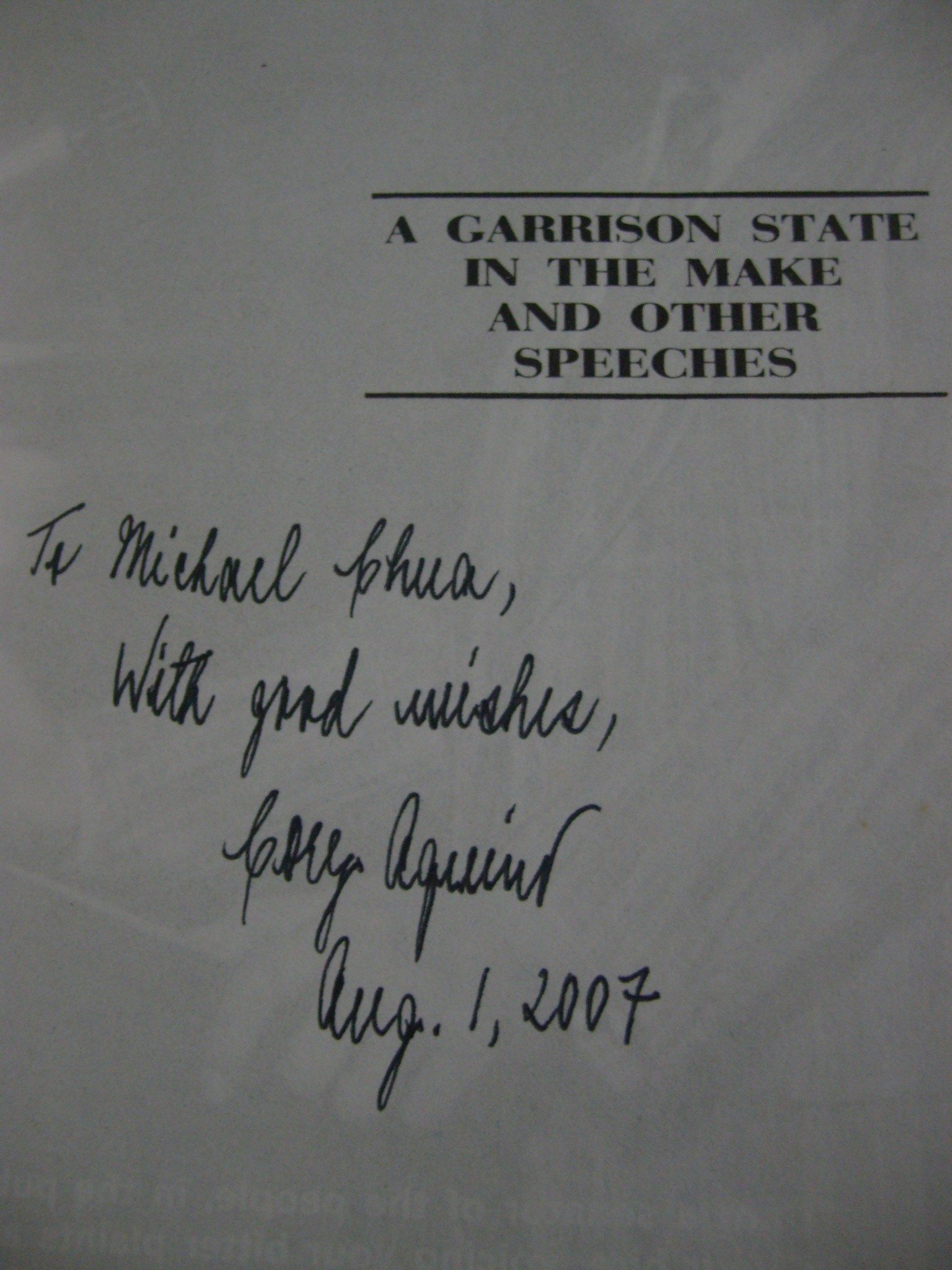
ImageIsang nakapangingilabot na alaala:  Isang aklat na pinirmahan ni Cory Aquino para kay Xiao Chua eksaktong dalawang taon bago siya sumakabilang-buhay.

HUWAG NANG IPAGDIWANG ANG BUWAN NG WIKA

Image

Dahil kaarawan sa Linggo ng Kanyang Kamahalan Pangulong Manuel Quezon na nag-adhika na magkaroon ng isang Pambansang Wika na batay pangunahin na sa Tagalog ngunit kabilang dapat ang mga salita mula sa ibang mga wika sa Pilipinas, kaibigan, tara, usap tayo… sa Filipino.

Madalas ako makakita ng mga karatula sa mga paaralan ngayon na ipinagmamalaki na “This is an English-Speaking Zone.”  Diumano upang tayo ay maging “globally-competitive,” ipinatupad ng nakaraang administrasyon ang polisiya na halos lahat ng asignatura ay dapat itinuturo sa Ingles.  Dito, kapag ikaw ay nagsasalita sa Ingles, kahit wala namang laman ang sinasabi mo, ang tingin sa iyo ay matalino.  Sa isang mamahaling kolehiyo aming nakita minsan ni Dr. Zeus Salazar, “English is the language of leaders.”  Sabi niya, “Bakit?  Si Napoleon ba iningles ang mga Pranses?  Si Mao ba iningles ang mga Tsino?”

Kahit marami ngayon ang “wrong grammar” sa paggamit ng Ingles, ipinagmamalaki natin na mas marami pa ring nagsasalita ng Ingles dito sa Pilipinas kaysa sa Inglatera.  Kung totoo ito, bakit tila hindi tayo mga pinuno sa daigdig?  Bakit tayo naghihirap?  Bakit walang sapat na marangal na trabaho sa bansa na kinakailangan na matuto tayo ng Ingles upang magsilbi sa pangangailangan ng mga dayuhan sa mga kasambahay, nars at caregiver at tagasagot ng telepono?  Bakit ang Hapon, Tsina, Europa ay mayaman kahit na maging ang mga CEO ng kanilang mga kumpanya ay bobo sa Ingles?  Sapagkat ang biyaya ng edukasyon, ekonomiya at pulitika dito sa Pilipinas ay nananatili lamang sa mga marunong mag-Ingles.  Ang may kontrol sa wika ay may bahagi sa kapangyarihan.  Maraming dahilan kung bakit tayo mahirap, ngunit hindi ba’t kabilang dito ang katotohanang hindi talaga makasawsaw ang mas nakararami sa mga isyu ng pagkabansa?  It’s the language, stupid.

Samahan niyo ako at hirayain natin (let’s imagine):  Sa kabila ng iba’t ibang wika na nakapaloob sa Kapilipinuhan, tayo ay nagkakaintindihan sa isang wika na mula sa ating kapuluan.  Ayon kay Dr. Salazar, “Gumagamit ng mga konsepto at ugali na alam natin lahat ang kahulugan, …pati ang relasyon ng mga kahulugang ito sa isa’t isa.  Ito ay nangyayari lamang kung iisa ang ‘code’—ibig sabihin, may isang pangkabuuang pag-uugnay at pagkakaugnay ng mga kahulugan, kaisipan at ugali.  Mahalaga (at pundamental pa nga) rito ang iisang wika.”  Imbes na sa Ingles lamang nakalimbag ang Harry Potter o Twilight saga, ito ay isinasalin sa wikang mababasa na rin ng mas nakararaming Pilipino; na naglilimbag na tayo ng mga aklat ukol sa pilosopiya, quantum physics o quantum mechanics sa ating sariling wika; Na sa sistemang legal sa Pilipinas hindi na naagrabyado sa kaso ang mga mahihirap dahil wala silang maintindihan; Na naisasama na ang mahihirap sa biyaya ng ating ekonomiya dahil naiintindihan na nila ito; Na unti-unting nabubuo ang ating bansa dahil “nag-uusap tayo,” tulad ng sinasabi ni Boy Abunda, ukol sa ating sariling kasaysayan at karanasan, natutuklasan natin ang ating sariling lakas, at sa pagkakaintindihan nabubuo ang respeto sa isa’t isa, na nagbubunsod ng pagkakaisa sa kabila ng pagkakaiba-iba.  Hindi ba napakaganda ng bansa natin kung ganoon?

Ito ang layunin ng Pantayong Pananaw at Bagong Kasaysayan, iskwelang pangkaisipan na sinimulan ni Dr. Salazar at patuloy na pinapanday ng mas nakababatang mga historyador (Para sa buong paliwanang, puntahan ang http://bagongkasaysayan.org), na sa pagbabalik-tanaw natin sa kasaysayan na “may saysay” sa atin, sa ating sariling wika, para sa bayan, mas maiintindihan natin ang ating sarili.  Maliit kasi ang tingin natin sa ating sarili dahil sa mga “historia” na isinulat ng mga dayuhan sa kanilang perspektiba at nagturo sa atin na umasa lamang sa kanila.  Bagama’t marami ang nagsusulat ukol sa ating kultura at kasaysayan, marami ang hindi nito naaabot dahil sa Ingles lamang nasusulat ang mga ito.

Hindi tayo maaaring maging “globally competitive” kung hindi tayo nagkakaintindihan bilang bansa at hindi matibay ang ating kultura.  Sapagkat ang nais ng globalisasyon ay magkaroon ng isang kultura ang daigdig upang mabenta ang mga produkto ng mga dominanteng bansa.  Magigising tayo minsan na wala na tayong pagkakakilanlan, na patay na ang ating pagkabansa tulad ng sinabi ni Simoun kay Basilio sa mga nobela ni Rizal.  Imbes na mapakinabangan natin ang globalisasyon, magagamit lamang tayo nito.

May mga nag-adhika noon na Ingles na ang maging pambansang wika tulad nina Isidoro Panlasigui.  Tinuruan na daw kasi ang Pilipino na magbasa ng Ingles, at may grupo na ayaw tanggapin ang Tagalog/Filipino bilang wikang pambansa.  Ngunit, ibang usapan kasi kung naiintindihan talaga ang kayang basahin.  Marami na sa kapuluan ang nakakaintindi ng Filipino dahil sa media.  Ang wika kasi ay kultura.  Ibig sabihin, hindi mairerepresenta ng isang dayuhang wika ang yaman ng ating kultura at damdamin tulad ng isang wika mula sa Pilipinas.  Ang “rice” sa Ingles ay palay, bigas, kanin, bahaw, tutong, sinangag, lugaw at iba pa sa Filipino.

Kapuri-puri ang halimbawa ng Pangulong Noynoy Aquino na kausapin ang bayan sa wika nito.  Nasa diwa siya ng kanyang ina na kahit elitista at Inglesera ay inutos sa kanyang Executive Order 335 na gamitin ang Filipino sa mga gawain ng estado.  Ayon kay Adrian Cristobal noong 1988, “This…is what President Corazon Cojuangco Aquino can legitimately parade as her achievement…:  That she has inducted the government and therefore the political realm into the same universe inhabited by the many…..  It is her one true act of statesmanship, an act that bolder presidents couldn’t dare because of the loud objections of regional leaders….  This presidential act will do more for our nationhood than any gesture at leadership.”  1 Agosto kapwa namatay ang Pang Quezon (1944) at Pang. Cory (2009).  Sana alalahanin din ang huli na tagapagtaguyod ng Wikang Pambansa sa buwan na ito at tunay na ipatupad ang kanyang magandang sinimulan.

Totoo, mahalaga pa rin sa akin ang matuto, magsulat at magsalita ng Ingles, at maganda pa nga matuto pa tayo ng Espanyol, Tsino, Aleman, Italiano, at iba pa.  Ngunit mali na itaguyod ang dayuhang wika habang isinasakripisyo nating ang pag-usbong ng Filipino at mga wika sa Pilipinas hindi lamang sa akademya kundi sa pamahalaan at ekonomiya.  Ito ay isang krimen sa ating kultura.  Kung patuloy na ipapatupad ang “English Only Policy” sa mga paaralan, nag-aaksaya lang tayo ng panahon, huwag na nating ipagdiwang ang Buwan ng Wika.

Sa mga nagtataguyod ng Filipino at ng mga wika sa Pilipinas, huwag mag-alala.  May kakampi tayo kay Emilio Jacinto, “tunay na [mahalaga ang] tao kahit laking-gubat at walang nababatid kundi ang sariling wika.”

Unang lumitaw sa pitak na “Walking History” sa Good Morning Philippines, 19 Agosto 2011.

WE WON THE REVOLUTION

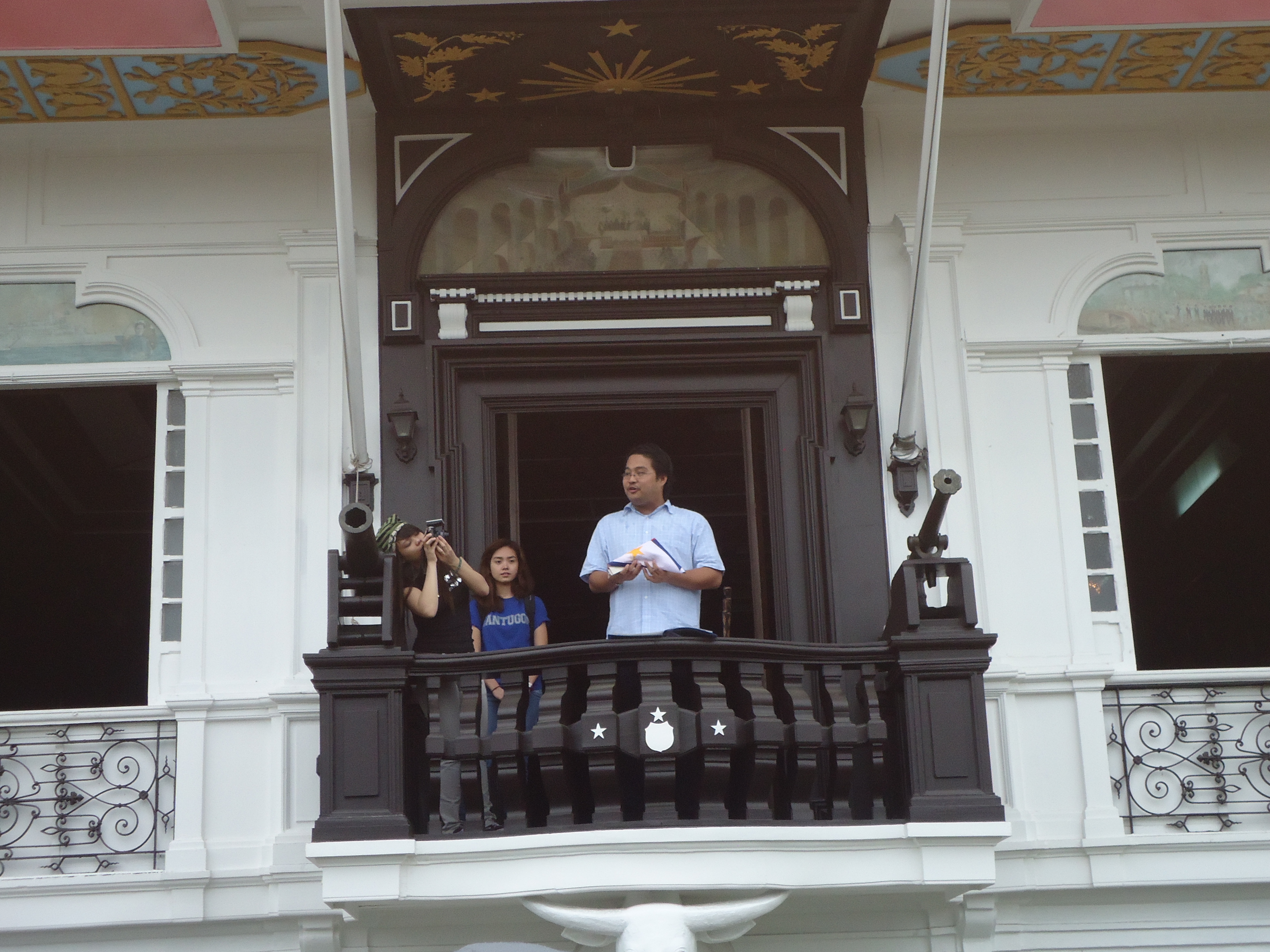
Xiao Chua at the balcony of the window where Gen. Emilio Aguinaldo proclaimed Philippine Independence on 12 June 1898 in Kawit, Cavite with Ms. AC Canete. Photograph by Jahm Guinto, 12 February 2012.

Yesterday, when I looked at the date 13 August, I knew it was an anniversary of a really important event that I always cite in my lectures in history and my tours, just didn’t figure it our immediately.  Only later did I realize that it was the 114th anniversary of the Mock Battle of Manila in 1898, when the Americans won over the Spaniards and took over Manila after the Spaniards negotiated to just be allowed to have an honorable defeat.  Since this is also the month of the start of the Philippine Revolution, this short piece I wrote for my former column “Walking History” from the former newspaper “Good Morning Philippines,” 10 August 2011:

When Ms. Rita Gadi asked me when and where the Philippine Revolution started in 1896, I was stupefied at first.  How do you quickly explain that many witnesses produced many answers:  Kangkong (23 August), Pugad Lawin (23 August), Bahay Toro (24 August), Sitio Gulod, Barrio Banlat (near Pasong Tamo now Tandang Sora Ave., 24 August), Balintawak (26 August).  Historians Milagros Guerrero, Emmanuel Encarnacion and Ramon Villegas wrote in an article in 1996 that the now “official” August 23 Cry of Pugadlawin is erroneous (there was no such place name in 1896 maps of the area), and that it was possible that there were many cries as they were organizing people in different places.  In a 1989 column anyway, Dr. Ambeth Ocampo cleared that all those other place names cited were in the area called “Balintawak.”  So maybe it’s safer to call it Cry of Balintawak.

The possibility of many cries can be supported by two historians, Dante Ambrosio and Enrico Azicate who in 1995 tried to walk through the places cited in accounts and sure enough, a path can be established that can lead to that important battle in San Juan by early morning of 30 August known as “Pinaglabanan.”

Dr. Guerrero, et al suggested that instead of celebrating the uncertain 23 August cry, it’s better to commemorate the well documented establishment of the Revolutionary Government by the Kataastaasang Sanggunian of the Katipunan on 24 August at the house of Tandang Sora in Banlat.  This is where Andres Bonifacio was elected as the first president of the first national government in the Philippines.  This is when our bansa was born.  With this, I agree with my mentor Dr. Guerrero.

A bigger problem than the contradicting facts of the first cry are misconceptions about the revolution itself.  We Filipinos, regrettably, easily forget about the past.  And worst, many times we commemorate and emphasize our defeats.  By reading history written for us by foreigners, we look at ourselves in the point of view of the other.   Thus our colonial mentality and inferiority complex which had a long term effect on us—we feel that all good things about us came from foreigners (remember learning about pamana ng mga Espanyol and pamana ng mga Amerikano?), and that “ginhawa” can only be attained if we go out of this country.  One thing we tell ourselves is that we lost the Philippine Revolution, and it was the Americans who helped us defeat the Spaniards with the victory of the “Hero of Manila” Admiral George Dewey at the Battle of Manila Bay.

One major thing that I cherished learning from Dr. Jaime Veneracion in one of my graduate courses in UP Diliman is that he emphasized that we won the revolution against Spain and that we must credit ourselves for it as a people.

When Gen. Emilio Aguinaldo, tactically agreed to go abroad after his government made peace with the Spaniards, he negotiated with key American diplomats who verbally promised that they will help the Filipinos ensure their independence.  One researcher from the National Historical Commission showed me a book by an American historian which stated that there was no evidence that the promise was ever given.  This will show us how we must be conscious of perspective when reading history.  Facts are not just facts.

On 1 May 1898, the seven-vessel Asiatic Fleet came to Manila Bay under Dewey and in the battle sunk all obsolete twenty Spanish ships.  As Dr. Ambeth said, it was a “mismatch.”  There was only one American casualty, and he didn’t die of battle wounds but of heat stroke!  But Dewey did not have ground forces and so at this point they actually haven’t occupied the Philippines.

As the Americans were returning Aguinaldo back from Hongkong aboard McCulloch, many revolutionaries around the archipelago organized themselves again.  Little by little, the Anak ng Bayan returned and took-over different towns from the Spaniards.  After one of these battles, the Battle of Alapan, the Philippine flag made by Marcela Agoncillo, daughter Lorenza and Delfina Herbosa-Rizal, was unfurled at Teatro Caviteño in Cavite Viejo (Kawit) on 28 May.  Thus we celebrate this as the start of the flag days.

Hearing about the continuous victories of the Filipinos in defeating the Spaniards who were our colonizers for 333 years, Gen. Aguinaldo acted quickly and at 4:02 PM on 12 June proclaimed Philippine Independence at the central window of his mansion in Kawit, [to] the tune of Julian Felipe’s Marcha Filipina Magdalo / Marcha Nacional Filipina.  With this self-proclamation of V-S Day (Victory Over Spain), I believe that 12 June of every year is worth celebrating by every Filipino.

One of the 97 signers of the Acta was a certain Col. M.L. Johnson, assumed by many as the representative of Dewey who couldn’t come because it was his “mail day.”  Historian J.R.M. Taylor clarified that he was not an official representative but a cinematograph operator.  This shows that the Americans don’t have any intention to honor their word.  American ground troops came and by 13 August, won against the Spaniards.  Atop Baluarte de San Francisco Javier in Intramuros, the Stars and Stripes was raised for the first time.  But it was a pre-negotiated battle, so the Spaniards can be defeated with honor, thus the monicker “Mock Battle of Manila.”  Filipino troops marched to claim the old capital but they were stopped by the Americans.  Sensing finally that the Americans were not to be trusted, he went to Bulacan, organized the Malolos Congress on 15 September, which gave birth to the First Constitutional Republic in Asia by 23 January 1899.

Although this victory was short lived as we fought once again in our war against the Americans, it reminds us that united, we can defeat any long-term problem battling us.  With this I say, wake up and be inspired to greet every new morning as we proclaim our greatness.  Good Morning Philippines!

Let me dedicate this column to my professor, Dante Ambrosio, who fought for our bayan and wrote about our constellations, thank you and goodbye.  You are now part of the stars.

WALKING HISTORY

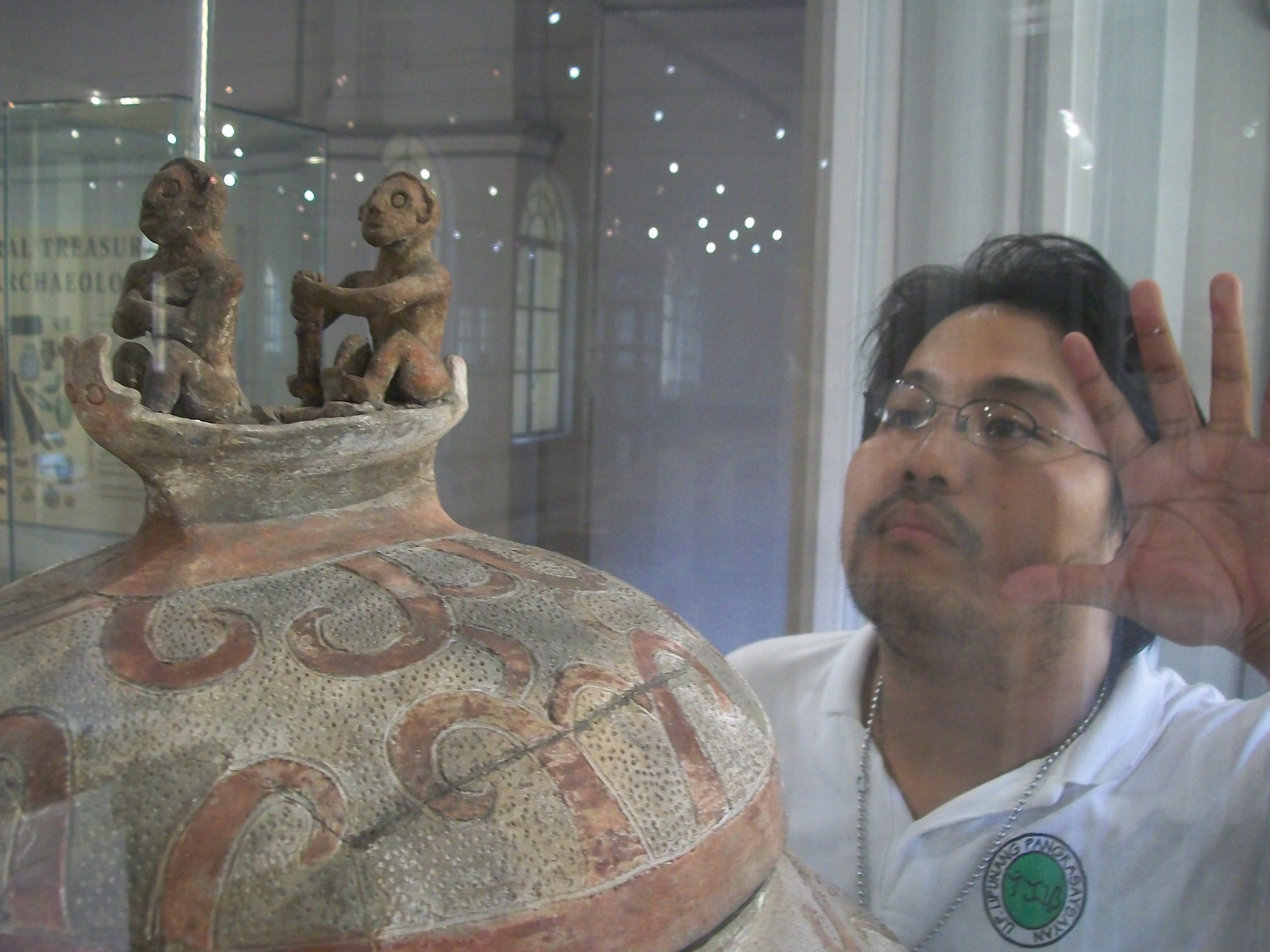
Adoring the Manunggul Jar at the National Museum and learning about the common culture and belief of all Austronesians, the ancestors of Filipinos.

Hi this is Xiao Chua, a student of history.

…and it’s XIAOTIME!

This is my new blog which I created to anticipate the closure of my multiply blog, Ang Tarlakin (winner of the 2007 Wikipinoy of the Year for History) by December.  I would also like to have a more accessible and permanent home for my more serious thoughts.

Earlier today, I toured two sets of people in Luneta and Intramuros — about a hundred or so college students, and then, some kids.  In between being a student and teacher of history, I am a lakwatchero, who uses the spaces around us to teach history.

The past will always be a part of travelling.  Yup.  Everywhere we go, there are remnants and monuments of what used to be.  But to many, the past is irrelevant.  The dictionary definition of History is “the written record of past events,” and since we Filipinos did not keep records before the foreigners came, most of what we have read was their narratives on us in their perspective and language.  We became too harsh on ourselves in the process—thinking we are an inferior, bad people.  But try to view the past in the Filipino perspective, and we will be selling the idea that our best tourism asset is really our people.  I was taught by my mentor, historian Dr. Zeus Salazar, that the root word of our equivalent term for History, Kasaysayan, is “saysay.”  Saysay can mean “story” but it is also a word for “meaning.”  Seeing in the past what is meaningful and relevant to us, the people?  Hmmm, this sounds like a novel idea since we are coming from a perception that history classes are irrelevant and are the best sleeping pills.

Saysay of Lakwatcha

What does Lakwatcha really mean?  Lakwatcha editor Ai Macalintal once asked me this question.  Since I am not an expert on languages, I consulted mentors and friends.  Dr. Nilo Ocampo of the UP Department of Filipino referred me to the Vito Castillo Santos’s “Vicassan’s Pilipino-English Dictionary,” in which it says Lacuacha is a word from the Spanish that means “truancy.”  Truancy???  That explains why, when I asked Dr. Salazar and my friend Prof. Alvin Campomanes of the University of Asia and the Pacific what Lakwatcha meant for them, they both said it’s to loiter, roam around or promenade to shirk from duty.

Not a very positive word, it seems.  But we all know that culture and words are dynamic and the people can redefine them over time.  In this magazine, we can redefine lakwatcha to mean not just a vacation to get away from “the grey and frenzied hurly burly of the city life,” as Jose Mari Chan puts it.  It can also mean to travel and know ourselves as a people by discovering our different and shared histories and cultures.  Another mentor of mine Dr. Vic Villan of the UP Depatment of History, had another theory on how lakwatcha can mean to us.  It can come from the Cebuano “lakaw,” or the Hiligaynon “lakat” and the Tagalog “lakad,” all refers to the act of walking.

Saysay in Lakwatcha

Aside from being a teacher and historian, I am a historian-on-board buses for Linangan Education Trips (which specializes in historical educational tours) which I have been doing since 2006.  With this, I am able to lead students to remember the past in the spirit of the Katipunan’s “peregrinasyon.”  I learned from Dr. Jimmy Veneracion that during the years after the Philippine Revolution of 1896, the veterans of the Katipunan, returned to their battlefields, in groups remembering their fallen comrades, mga kapatid, which they called “peregrinasyon” or pilgrimages (as when we have spiritual journeys to the Holy Land).  When we travel to Fort Santiago, Banahaw, Biak-na-Bato, Mt. Nagpatong in Cavite, Luneta, Pinaglabanan, Corregidor, and many other places around the archipelago, we are honoring those who died before us so we can be free and have the opportunity to be good Filipinos.

Recently, I learned from the other tour company which hires my services, the Heroes Square Heritage Corporation (it owns the beautiful commercial building in front of Fort Santiago and it facilitates Intramuros tours with actors portraying historical personages for young kids) that in European museums, they call tour guides “docents.”  It’s the first time I heard it used in the Philippines.  For Heroes Square, the docent is not just a tour guide but is also a passionate teacher who teaches love of country.  In the next blogs, I hope that you join me as fellow travellers in a “pereginasyon” to know how great a people we are.  It’s time to recognize ourselves in the words of Tito Boy Abunda, “We are Filipinos, we are your best friends in Asia.”

I am proud to be a docent.  I give meaning to lakwatcha.  I am walking history…

This first post is dedicated to Dr. Ambeth R. Ocampo, whose birthday we celebrate tomorrow, for bringing me to the journey of history with his book Rizal Without The Overcoat when I was in grade 5.  Reading him and trying to catch his tone I first realized how I wanted to be a cool history teacher just like him.