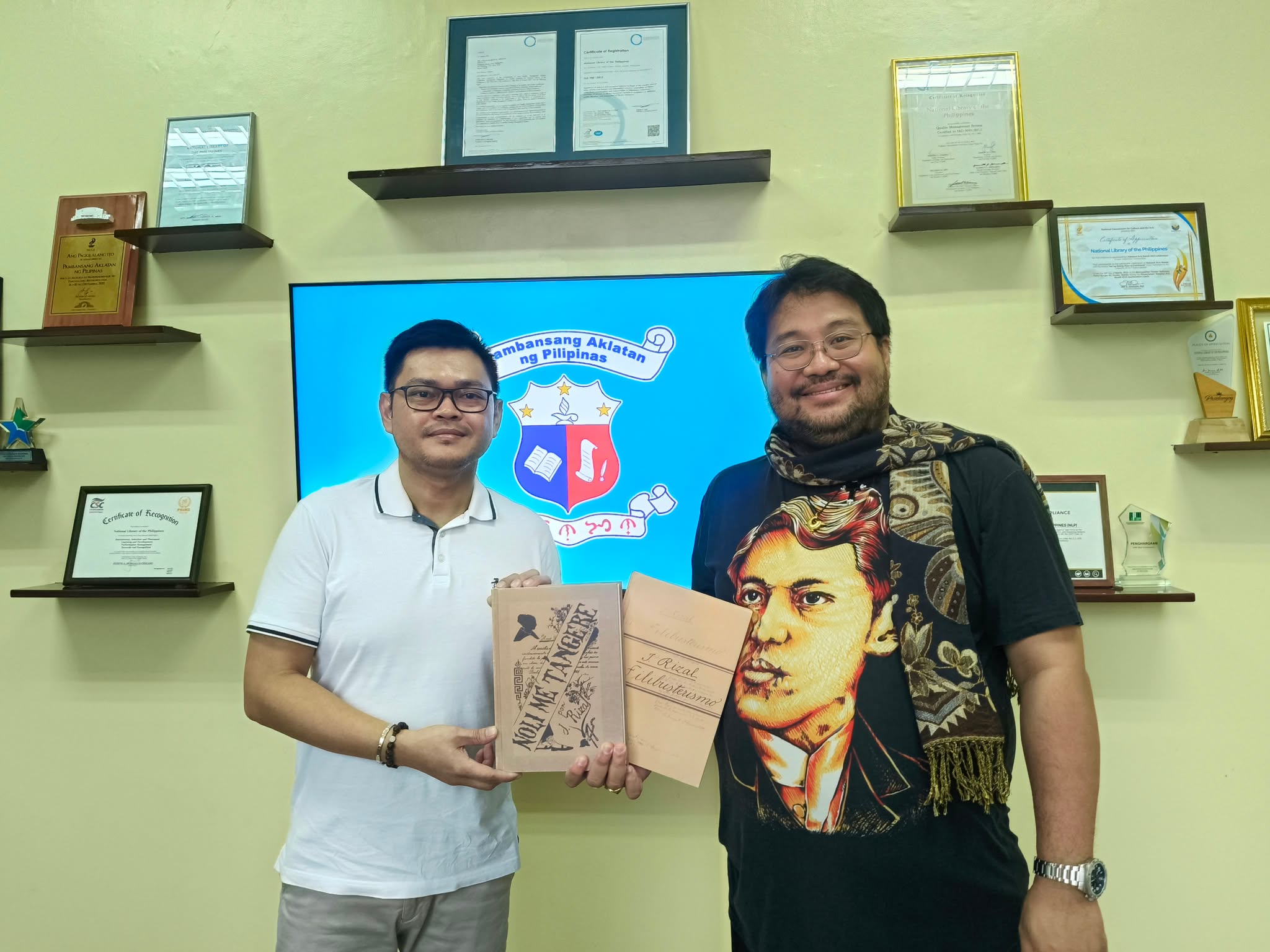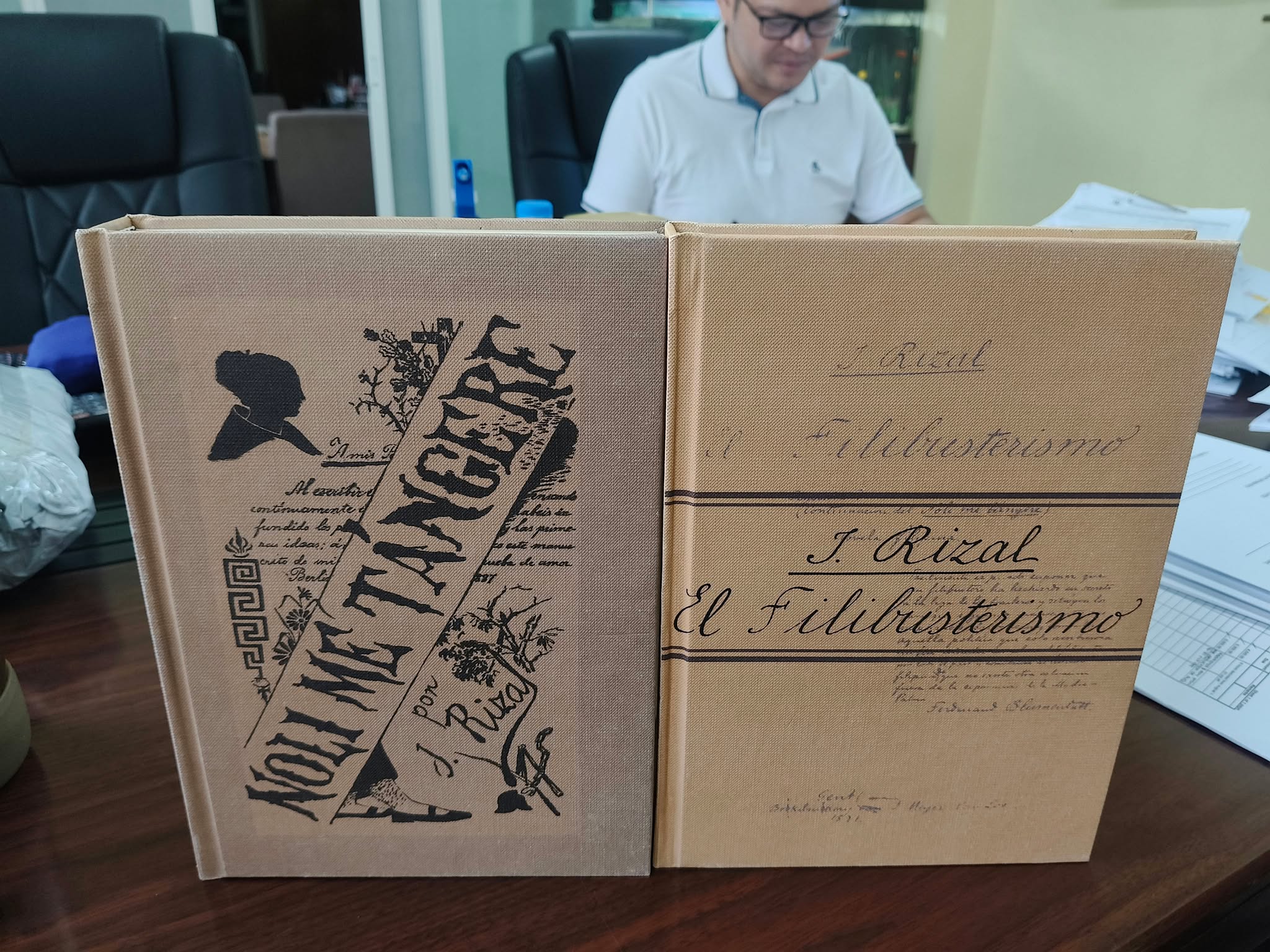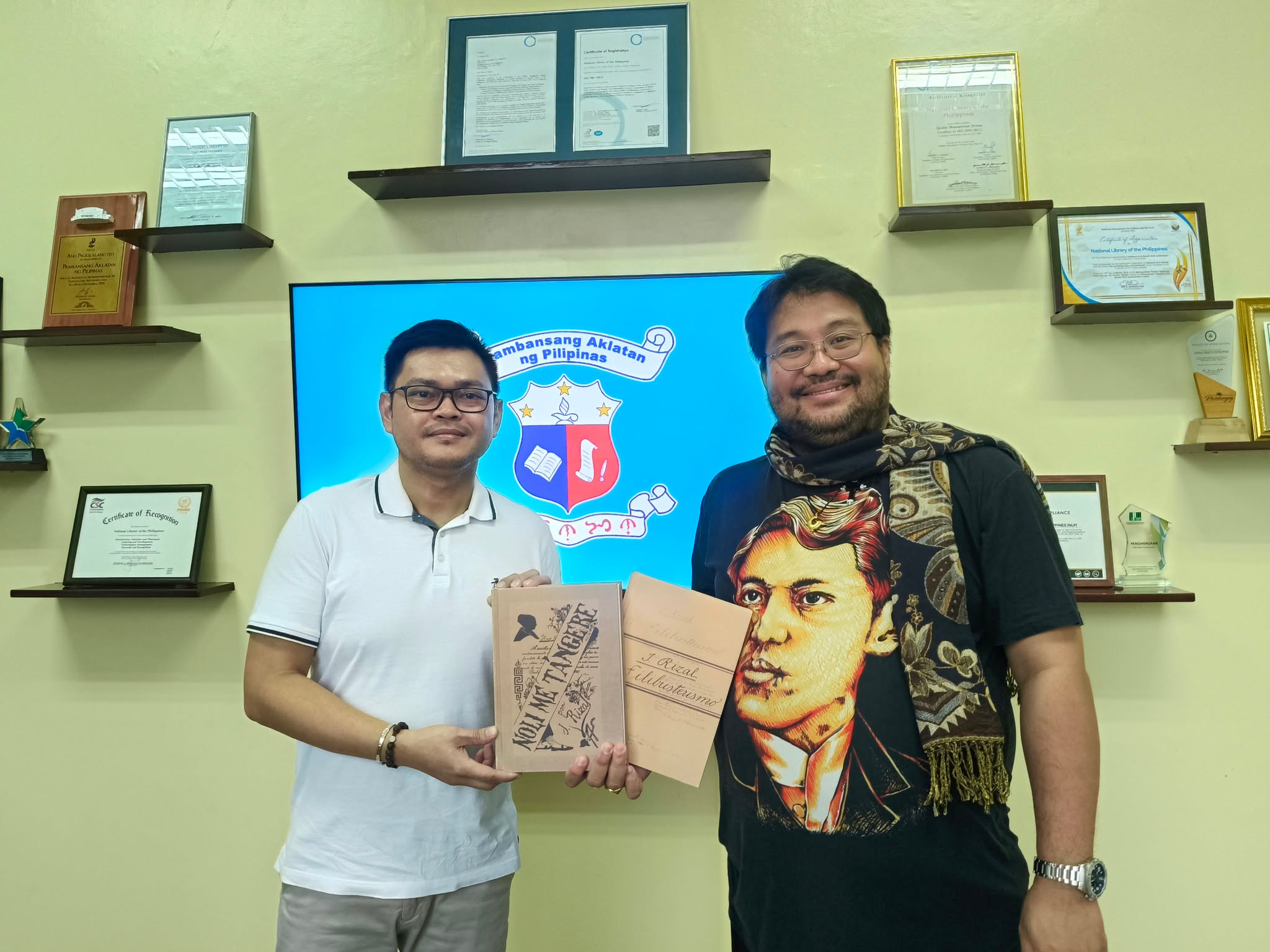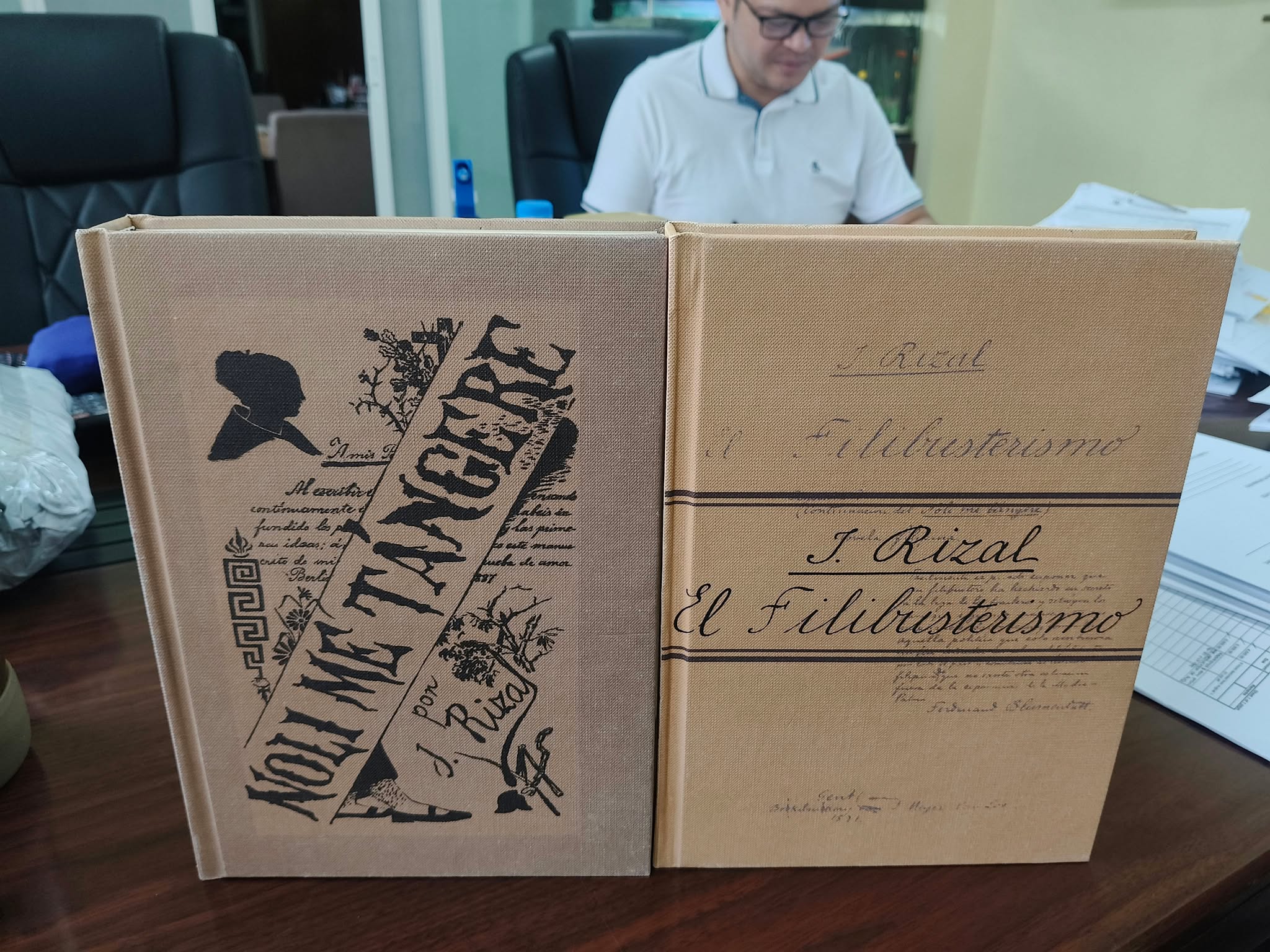
Introduction to the National Library of the Philippines El Filibusterismo mini-facsimile
Prof. Michael Charleston “Xiao” Chua, Ph.D., Historian (COS), National Library of the Philippines
José Rizal’s El Filibusterismo is a sequel to his first novel, Noli me Tangere, which Penguin Classics declared as the first major artistic manifestation of Asian resistance against European colonialism. Hence, both are important not only in the formation and imagineering of the Filipino nation but also in the story of anti-colonial and anti -imperialist struggle in our continent.
According to Floro Quibuyen, in his book A Nation Aborted: Rizal, American Hegemony and Philippine Nationalism, when Rizal was asked by his brother Paciano to go to Spain in 1882, he was told by his brother that “the principal purpose” of his trip was not just “to finish this [medical] course but to study other things of greater usefulness.” This implies that the creation of a study or a work representing the past and the present of the islands at that time was their main objective. Hence, the Noli, the El Fili and the historical annotations to the Sucesos de la Islas Filipinas of Antonio de Morga were really the fulfillment of Rizal’s dream project.
To underscore the importance of these works, the first edition of the annotations to the Morga, and the original manuscripts of the Noli me Tangere, the El Filibusterismo and the “Mi Ultimo Adios” (Rizal’s last farewell) along with the Proclamation of Independence, the Trial of Andres Bonifacio and the 1734 Murillo-Velarde Philippine Map, are now displayed at the National Library of the Philippines Permanent Gallery which came to life as an initiative of the NLP Director Cesar Gilbert “Jet” Q. Adriano in 2024.
The historian Augusto de Viana pointed to me that looking at the manuscript of the Noli, one may notice Rizal’s signature handwriting was still flowing. To cut the cost of printing, he placed lines on the side of the ejected manuscript on Elias and his lover Salome, but still readable. The story was more playful, more satirical. But the manuscript of the El Fili tells a different story, the flowing handwriting had become more pointed. At first, perhaps knowing he will have lots of paper, he was just using the front side. Eventually, he will use the back pages and will have so many ink erasures in the text, many times whole pages, that will not be easily recoverable. It was an angrier novel, owing to the context of the Rizal family’s expulsion from the Calamba friar land in 1890, and the lack of funds owing to friends who promised support for the writing of the novel but did not fulfill them. His depression often makes him want to burn the manuscript but the novel was saved by the financial help of his Kapampangan friend Valentin Ventura and the novel was published in Ghent, Belgium in 1891.
Crisostomo Ibarra, Noli me Tangere’s protagonist, re-emerged as Simoun in the El Filibusterismo. His main goal is to agitate the people to rise up against the Spanish colonizers, hence the term “filibuster” which in the Spanish colonial context meant a rebel. Simoun eventually failed and this was read by many as Rizal’s warning against a revolution, being a reformer and a pacifist. That the Fili was an anti-revolution novel. But reading José Alejandrino’s memoir The Price of Freedom, Rizal perhaps had a different message. Being his roommate in Belgium while finishing the novel, Rizal reportedly told him, “…I regret having killed Elias instead of Crisostomo Ibarra; but when I wrote the Noli Me Tangere, my health was badly broken and I never thought that I would be able to write its sequel and speak of a revolution. Otherwise, I would have preserved the life of Elias, who was a noble character, patriotic, self-denying and disinterested— necessary qualities of a man who leads a revolution—whereas Crisostomo Ibarra was an egoist who only decided to provoke the rebellion when he was hurt in his interests, his person, his loves and all other things he held sacred. With men like him, success cannot be expected in their undertakings.” Rizal was not totally anti-revolution. As Rizal’s great grandniece Gemma Cruz Araneta puts it, “It is a novel on how not to wage a revolution” if it is only about selfish interests.
The public historian José Victor Torres had another insight from his paper “A la Juventud de Filibusteros” (an allusion to Rizal’s poem “A la juventud Filipina”), that the author may be alluding to another revolution in the title of the novel, not a bloody one, but the one initiated by young people in the universities like Basilio and Isagani. A peaceful revolution through education.
But Rizal, through Simoun, had a warning: “A, kayong mga kabataan! Nanaginip pa rin kayo! …Gusto n’yong maging mga Kastila din kayo, pero hindi n’yo nakikitang ang pinapatay n’yo ay ang inyong pagkabansa! Ano ang inyong magiging kinabukasan? Isang bansang walang pagkatao at kalayaan? Lahat sa inyo ay hiniram, pati na ang inyong mga depekto. Mamamatay kayo bago pa man dumating ang inyong kamatayan!”
It should be a truly Filipino education that make us love our country, love that will make us give our efforts for her, as Rizal wrote in this novel, “It is a useless life that is not consecrated to a great ideal. It is like a stone wasted on the field without becoming part of any edifice.”
May the pages of this facsimile copy inspire you to contribute a stone to the edifice of the nation, just like Rizal did.