ONE American historian, Kenneth Scott Latourette, wrote in a 1964 textbook we use in some colleges even today: “Before the coming of the Spaniards, as we have hinted, the Philippines were backward in civilization as compared with most of the rest of the Far East… The Filipinos were still but partly removed from the primitive stages of culture.”
Reading this made Filipinos believe that our ancestors were never great. That when the Europeans came here, they were all-powerful and were able to easily deceive our docile ancestors. But when explorer Ferdinand Magellan arrived here, his companion and chronicler Antonio Pigafetta actually described a different story. They had been on the journey to attempt to circumnavigate the world for the very first time for about a year and a half, about 90 days in the open ocean without seeing land. A few days back, they reached the Marianas and even before they could dock, the Chamorros had robbed them. They lacked clean water, they were hungry, tired and believed they could die anytime, when they saw an island in this part of the world later known as The Philippines on March 16, 1521.
They reached and landed on Homonhon Island in Guiuan, Eastern Samar the next day. Contrary to our popular image, nobody welcomed them as they docked. They found a spring and finally got clean water, especially for the sick.
But on March 18, some locals from a nearby island spotted the three ships, approached them and saw the weary Europeans. In Europe, a foreigner in your territory can mean war. But our ancestors saw fellow human beings that needed help, even without understanding their language. They immediately gave the visitors food. After four days, the same people returned with two boats-load of food. And with that, the Europeans experienced what is known around the world as Filipino hospitality; we call it pakikipagkapwa and kabutihang-loob. It refueled the journey that became the achievement of science and humanity.
Magellan then reached the island that Pigafetta called “Mazaua.” One of their companions, Enrique of Malacca understood the language of the two brothers who welcomed them, the ruler of Mazaua Raha Siaui, and the ruler of Butuan Calagan Raha Colambu, most probably Malay.
Pigafetta admiringly described our ancestors’ culture, repeatedly mentioning the balangay and, well, the gold: “Pieces of gold, of the size of walnuts and eggs are found by sifting the earth… All the dishes of that king are of gold and also some portion of his house….”
He described Raha Colambu, “According to their customs he was very [tidy] and the finest looking man that we saw among those people. His hair was exceedingly black, and hung to his shoulders. He had a covering of silk on his head, and wore two large golden earrings fastened in his ears. He wore a cotton cloth all embroidered with silk, which covered him from the waist to the knees. At his side hung a dagger, the haft of which was somewhat long and all of gold, and its scabbard of carved wood. He had three spots of gold on every tooth, and his teeth appeared as if bound with gold. …He was tawny and [tattooed] all over.” He was not describing a ruler of a savage people but a fine gentleman, even to Pigafetta’s tastes.
What Pigafetta described was different from how we once imagined our ancestors to be — living in small communities that were independent from each other. The world of the Visayas was a confederacy where the kings had diplomatic relations. The presence of the balangay and of silk clothing, coupled with archaeological evidence of Ming jars only prove that we were once part of the Southeast Asian trade route to China. King Colambu even accompanied Magellan to Cebu so he could trade with its ruler, Raha Humabon. Cebu was an entrepot where products from different parts of Southeast Asia exchanged hands.
There, Magellan underwent a ritual, which was also the basis for the formation of the community. When small villages wanted to form a larger, stronger political unit called the Banua (or the Bayan), their datus would mix drops of their blood in wine and they would all drink it. It was not just a mere contract with blood, but a sandugo — the community becomes one blood, kapatiran — a promise to love everyone in the community as your own brethren. In trade terms, this also meant a commitment to fulfill agreements, or else face the circumstances of going to war — pangangayaw — to correct the wrong that was done.
In a way, in 1521, the Filipinos and Europeans “discovered” one another. We started out respecting each other and had the time of our lives. But Magellan was quickly dragged into our internal conflicts and faced the consequences of arrogance, pride and of failure to understand the culture of others.
I AM not into saying that the time before the Spaniards was a “golden age” and that our ancestors’ lives were perfect. No. I am not an essentialist, and I don’t romanticize our ancestors. I also do not believe in what others call “set Filipino values” even if sometimes I use the word in English for lack of a better term (because these so-called traits are not homogeneous and are different in various parts of the country). What I do recognize is that they had freedom. They had contact with other people and traded with them and that they had ideals — although not set and homogeneous — that were guided by our common Austronesian culture and manifested in one way or another in various parts of the country. Instead of the Westernized term “values,” I like to call them kalooban — Kalooban ng Bayan.
Since our Austronesian ancestors had a pottery culture, we are actually like the jars they made. We have labas (outside), loob (inside) and lalim (depth) and of course, laman (content).
And we go back to the figure on a boat on the cover of the Manunggul secondary burial jar. It is a “kaluluwa” going to the afterlife. The equivalent concept of the “soul” — “kaluluwa” in Tagalog, “kalag” in Visayan and “kaladwa” in Pampango. It is one of the life forces inside a person in the Filipino psychology. Let me explain how our ancestors viewed their world.
Based on the beliefs of many ethnolinguistic groups in the country, we know that our ancestors believed that a human being is composed of the “panlabas” (external, our bodies) and the “panloob” (internal). And “panloob” makes the human a “tao.” Panloob in itself contains the life forces “ginhawa” and “kaluluwa.”
The “ginhawa” is the life force located in our liver (stomach area), and it animates our well-being — comfortable life, healthy living, relief, good breathing, food, even sexual pleasure. People who want to cut your “ginhawa” would punch you in the stomach area (upper cut). But there would be no true “ginhawa,” it will not work well, if the “kaluluwa” is not in its right place.
The “kaluluwa” is the life force located in our brain, and is the one that gives us our feelings and our will as “tao.” Our ancestors believed that our “kaluluwa” has an alignment in heaven. Our soul’s alignment should always be in place because if it is moved (disoriented — nausog), we will feel ill (magkasakit, mawalan ng ginhawa). Because the belief is that the “kaluluwa” goes out of our bodies (through holes in our faces and the extremities of our bodies which are our fingers and toes), they have to come back again in an orderly fashion by waking up well. To disturb the sleep might disorient the return of the “kaluluwa” which explains one’s bad feeling and irritability. A “kaluluwa,” especially of a young kid, can be disoriented by a person with a strong “dungan” or willpower, hence, nausog and nabate.
A bad person’s “kaluluwa” is not aligned in heaven (horizontal), hence, “halangangkaluluwa.” A good person’s “kaluluwa” is “matuwid” (vertically aligned to heaven) and that animates “kaginhawahan.”
Repeat: There is no “ginhawa” if there is no goodness “matuwidnakaluluwa,” “mabutingkalooban.”
Protection of the “kaluluwa’ from intrusion of the “masamangkaluluwa”, “maitimnabudhi” was important, that is why they scare these elements through “kaliwanagan,” by wearing gold near these parts of their bodies as anklets, bracelets, necklaces, earrings and sashes — hence the culture of gold of our ancestors which amazed the Spaniards. “Mabutingkalooban” is manifested through “pakikipagkapwa” (seeing the self in the other) and “kapatiran” (treating your fellow as a brother). In short, loving your fellowmen. We even form our political communities into the “bayan” when the datus agree to come together and do the ritual of “sandugo,” from “isangdugo” or having one blood as brethren.
When the “kaluluwa” dies, he goes to the afterlife riding a boat with an “abay” — a companion. This shows the primacy of the maritime culture in our ancestor’s lives. But the “kaluluwa” can go back to nature to take care of his relatives, becoming an “anito” and dwelling in nature, taking the forms of trees, wood, rivers, mountains. This is the reason why our ancestors loved nature and respected it.
It is true that no civilization is perfect, yet, we can say that these concepts, the “kalooban,” of our ancestors are important to us because they are reflected in our words and way of life, and because a careful reading of history will show that these concepts continued to be manifested in our struggle for freedom, especially with how Andres Bonifacio and Emilio Jacinto imagined what our nation could be like after the revolution — a nation of “magkakapatid” who are “malaya,” free, because they have “kaginhawahan” and mabutingkalooban. Hence, a civilization of Love.
ON June 12, the nation will celebrate the 122nd anniversary of the Proclamation of Philippine Independence by Gen. Emilio Aguinaldo in 1898 — the official birthday of the nation. But some would suggest that the nation was born earlier, on Aug. 24, 1896 when Andres Bonifacio established the first national revolutionary government.
The fact is the Filipino nation was birthed by the 1896 Philippine Revolution and the ideas of the Propagandists and the Katipunan. But I believe we should go way, way back. We have divided ourselves with our ethno-linguistic groups and geographical regions. We continue to fail to unite because our basis of unity is political. But we are oftentimes divided by it. We should go deeper than that.
There are many words we use to describe the Filipino people, but seldom do we say we are “great.” Our colonial experience brainwashed us that we are small people, a small nation. But we are a great people, and I will tell you why.
The story of this nation began with a boat. Many thousands of years ago, the Homo Luzonensis and the Tabon Cave woman (Homo sapiens sapiens) walked these islands. But it was our Austronesian ancestors who peopled these islands, riding these boats 5,000 years ago. Then they introduced an innovation in maritime history that would make the boats stay afloat longer and travel farther distances — the outrigger. And because of these outrigger canoes, as genetics will prove to us, our bloodline scattered from these islands to Southeast Asia, Oceania, New Zealand and Hawaii as far as Easter Island to the east of the Pacific and Madagascar to the west near Africa. This is how bold our ancestors were! Unafraid of the tempest, deciphering the stars (yes, they had a concept of constellation). They went to search for home and kaginhawahan (the good life or well-being).
They not only left traces of our bloodline in this part of the world — oftentimes called the Malay world (DuniaMelayu) or the Austronesian world. They also left traces that reflect our common culture. If you look at the different ways of counting even in the various totally differing languages in the Philippines, you will see similar words. A house is “bahay” in Tagalog, is also “balay” in Visayan and in Bahasa and is “bale” in Pampango. Which brings me to an important point. We have common concepts, even if we have more than 170 Philippine languages, that all of us understand because we all came from the same mother culture.
Even in the way we construct houses. The houses on stilts have large roofing and windows for cooling to achieve kaginhawahan inside amid the tropical climate and is elevated as protection from extreme ground temperature and wild animals. It looks like a cube, hence the Spaniards called it “bahaykubo.” Its materials are locally sourced, including the sturdy bamboo, flexible enough to withstand extreme weather conditions. An American architect William Le Baron Jenney witnessed this when he visited the Philippines and was inspired to design, taking the philosophy of houses on stilts, the first American skyscraper. Another common thing would be rice terracing, a brilliant way for our ancestors to respond to the challenge of their environment.
But if there’s one cultural item that would show the oneness of our common culture, it would be the Manunggul Jar, which was found in the Tabon Cave in Palawan, made by our ancestors around 2,800 years ago. It is common for many Autronesians to bury in secondary burial jars (being part of a great pottery tradition) as they are also found in Maitum in Saranggani province, in Masbate, in Bicol and in many other parts of the islands.
By itself, the Manunggul Jar doesn’t tell much; its cover features a boat with two human passengers. But with knowledge of local beliefs and Filipino psychology you will understand its deeper meaning. In many parts of the country, we believe that the soul passes through the sea going to the afterlife. We know this because we have ancient grave markers in Sulu that symbolizes a man on a boat and coffins shaped like boats in the Butuan, the Cordilleras and Romblon — a testament to the primacy of the maritime culture on our ancestors.
Then there’s the representation of the soul — kaluluwa — riding the boat. Exploring this Austronesian concept will lead us to understanding other concepts that are still important to Filipinos — kaginhawahan, mabutingkaluluwa at kalooban (goodness), pakikipagkapwa (seeing the self in the other) and kapatiran (brotherhood and sisterhood) and how they are instrumental in the formation of our concept of the community — the bayan.
And we will see how in the course of our history, these concepts continue our greatness as a people, without us realizing it, as a civilization of love. We should rekindle it, our ancestor-given wisdom and greatness.
ON Thursday, November 1, we will be commemorating our loved ones who have passed on to the next life in the feast of Todos los Santos, All Saints’ Day. Actually, the feast for All Souls would still be November 2 but most of us consider our dead relatives as saints anyway, that’s why we go to our cemeteries on November 1.
Since November 1 is All Saints’ Day, then the night before that used to be called “All Hallows’ Evening” in Western countries; the word “hallow” means a holy man or a saint, thus “hallowed be thy name.” It is now called Halloween. Ancient Celtics called this the “Samhain” feast where they believed that the souls of their dead loved one shall return. They celebrated this by knocking on doors of other houses dressed as the soul of the dead, and should one not give anything to them, they will play a prank on the household, thus “trick or treat.”
But we have a native-sounding name for our feast for the dead, “Undas.” According to Dr. Lars Raymund Ubaldo of the DLSU History Department, who studied death practices in Ilocos, the word actually comes from the Spanish “honras funebres” (funeral honors). In some Tagalog provinces, undas is called “honras” and “undras,” and in Ilocos, the “atang” is also called “umras.”
A thousand years from now, when all of us are gone, the people from the future will find our graves and, just by reading our tombstones, or looking at the things that are found with our remains, they will know the life we lived. This is the work of archaeology, as Irene Carolina Sarmiento simply implied in her children’s book Tabon Girl (Batang Tabon). It is digging through the trash that our ancestors left to know how they lived.
But many of the histories we have read before had emphasized our seeming lack of culture and civilization before colonialism came. One such book was the popular 1964 textbook A Short History of the Far East by Kenneth Scott Latourette which stated that: “Before the coming of the Spaniards, as we have hinted, the Philippines were backward in civilization as compared with most of the rest of the Far East…. The Filipinos were still but partly removed from the primitive stages of culture.” (Emphasis mine.)
That’s why the work of archaeologists such as Dr. Grace Barretto-Tesoro is important. For her dissertation in Cambridge, she studied the graves of our ancestors in Calatagan, Batangas and the items that went with our ancestors to their graves tell us of their rich and elaborate culture: tridacna gigas shells, gold and other ornaments, and even skulls of what are believed as slaves. One of those found was even believed to be an ancient priestess, a catalonan, as babaylanes were called in Luzon.
But the way we bury can also tell us that despite the fact that we are a multi-ethnic, multi-cultural and multilingual nation that doesn’t seem to have anything in common, there are actually patterns of culture that bring us back to our common heritage, which is the heritage of our Austronesian pioneers.
Take for example, the Manunggul Jar that was found in 1962 in Lipuun Point, Quezon, Palawan and was dated from 890-710 B.C, one of the national treasures of our nation displayed at the National Museum of Anthropology. I was a student of Dr. Bernadette Abrera at UP, and she taught us the belief of our ancestors that when one dies, the soul enters the afterlife in a boat and this is reflected in the design of the cover of that particular burial jar: two souls on a boat. Abrera also made us notice that the boat in the jar actually has a face; our ancestors believed that even things such as boats have souls, because things from nature is where our “anitos” can dwell. This made them respect nature as the home of the spirit of their ancestors.
Another archaeologist, my batchmate Joan Tara Reyes-Hernandez, studied the “sunduk” grave markers in Sulu that date back hundreds of years ago. Samples of these in the National Museum show us designs that look like a person on a boat similar to the imagery found in Manunggul. Also, in Kabayan, Benguet; Sagada, Mountain Province; and even in Romblon, coffins had boat-shaped designs. In Batanes, grave markers were also shaped like boats. I always wondered if “bangkay” has something to do with “bangka.”
Found in many places around the Philippines, they all point to a very important aspect of common Filipino identity that we should always emphasize: our rich maritime culture.
So, our graveyards are not only rich sources of history, but a reminder that we can be culturally united as a people.
IN last week’s column, I tried to establish that our nation’s story began with a boat. In a new National Historical Commission of the Philippines and De La Salle University coffee table book, Tataya: Documenting the Story of the Ivatan Boat, to which I contributed an essay, I wrote that this maritime culture that still exists in Batanes, was reflected in the spiritual beliefs and burial practices of our ancestors, and in how our heroes imagined the Filipino Nation.
“Our maritime culture was also reflected in our ancient faith and world view. The Manunggul burial jar found in Palawan shows us that our ancestors believed that when we die, our soul rides a boat into the afterlife. Historian Bernadette Abrera pointed out that the boat in the Manunggul Jar actually has a face, indicating the belief of our ancestors that boats and things also have souls, especially if they came from nature. Since it is to nature where our ancestors dwell as anitos in the afterlife and so they had much respect for it.
“This connection of the boat to the afterlife is reflected in other ancient burial practices in the country. In Sulu, Mindanao, the design of the sunduk grave markers resemble a boat with a soul riding it. In Sagada, Cordillera, as well as in Romblon and other parts of the country, coffins had boat-shaped designs; and in Batanes, grave markers were actually shaped like boats.
“These ancient boats proliferated in other material cultures across Southeast Asia. In Batanes, Peter Bellwood and his team of archaeologists found a workshop, a place where an ancient jade earring called the lingling-o was made, in Anaro, Itbayat. The design of the remnants of lingling-o matches with other lingling-o designs found in other places not just in the Philippines but in neighboring Asian countries as well: Lanyu Island, Taiwan; Go Ma Voi, Vietnam; El Nido and Uyaw Cave, Palawan; and Niah Cave, Sarawak. Also, the raw material of these items — jade (nephrite) — is not found in the Philippines but in Southern China and Taiwan. Batanes, with its proximity to Taiwan, definitely had a role in facilitating not just the creation but in the proliferation of these designs throughout Southeast Asia.
“But our seas and rivers were not only highways through which our culture flowed, they were also the network that facilitated trade and kaginhawahan. Historian Zeus Salazar pointed out that most of the rich kingdoms near the riverbanks and seashores: Vigan, Lingayen, Maynila, Sugbu, Butuan, Sulu, and others, became part of the Southeast Asian trade route to China.
“With the introduction of the wheel and construction of roads and bridges, Spanish colonialism took us way from navigation and seafaring and our real talent and natural aptitude in the maritime culture. Yet, the ancient boat culture lives in Batanes.
“Our national hero José Rizal once predicted in an essay titled ‘The Philippines Within a Century’ that if a new generation of Filipinos were to have a second look at our maritime culture, we might be a great nation, ‘With the new men that will spring from her bosom and the remembrance of the past, she will perhaps enter openly the wide road of progress and all will work jointly to strengthen the mother country at home as well as abroad with the same enthusiasm with which a young man returns to cultivate his father’s farmland so long devastated and abandoned due to the negligence of those who had alienated it. Then the mines — gold, iron, copper, lead, coal, and others will be worked again — which will help solve the problem of poverty. Perhaps the people will revive their maritime and commercial activities for which the islanders have a natural aptitude, and free once more, like the bird that leaves his cage, like the flower that returns to the open air, they will discover their good old qualities which they are losing little by little and again become lovers of peace, gay, lively, smiling, hospitable, and fearless.’
“When Andres Bonifacio during the Philippine Revolution called the country Katagalugan instead of Filipinas, he meant that we were Taga-Ilog — River People. If in a boat, the concept of barangay as a community that eventually became the bayan began, we continue to have a metaphor for our country as ‘The Ship of State.’”
From the balangay boat to the barangay economic unit to the bayan and the Sambayanang Pilipino, we have come a long way.
Thus, the still existing boat culture in Batanes can give us an idea of our ancestors’ maritime culture that may inspire us to imagine and see our commonalities as Austronesians despite being an archipelagic people who are now multi-cultural and multi-ethnic and having 171 different languages. Thus, we realize we are one nation with a common sentiment and predicament. That we are all just in one boat.
“THE story of our nation began with a boat.” This is how I began an essay titled “The boat as a metaphor of nation,” a text I contributed to a new coffee table book published by the National Historical Commission of the Philippines, Tataya: Documenting the Story of the Ivatan Boat.
It comes together with another handsome volume, Vahay: Documenting the Story of the Ivatan House, published in cooperation with the De La Salle University, the main texts written by Dr. Lars Raymund Ubaldo, Edwin Winston Valientes, Christian Vaso and Gary Mariano, with images from photojournalist Jimmy Domingo.
My main point was that the still existing boat culture in Batanes, can give us an idea of our ancestors’ maritime culture and may inspire us to imagine and to see our commonalities as part of the Austronesian peoples, and thus unite us as a nation with a base culture.
I first talked about the basic political community in the Philippines, called the “barangay”: “It is said that the Spaniards adapted this unit from the political whole that was already existing when they came in contact with our ancestors during the 16th century. But that barangay was not actually a political unit, but an economic one consisting of a clan which was led by a datu. A datu performed a blood compact with another datu, a ritual which symbolized brotherhood and unity, and a more complex political unit—the bayan, banua or ili—was created.
“But the term barangay came from the word balangay — a boat with outriggers which our ancestors invented. Starting about six thousand years ago, they rode these boats and lived as a family as they dared the violent waves due to the Pacific monsoon winds to find new islands to inhabit, peopling our islands and other parts of Southeast Asia, Polynesia, New Zealand, Hawaii, and as far as Easter Island in South America to the east and Madagascar in South Africa to the west.
“According to archaeologist Peter Bellwood, our culture and language came from these ancestors of ours, which the experts refer to as the ‘Austronesians.’” In his message for the book, NHCP Chairman Rene Escalante explained: “If we are to believe Peter Bellwood, Batanes was the jumping-off point of our Austronesian ancestors going to mainland Luzon. Therefore, it can be said that the construction of the Ivatan boat called tataya came from ancestor-given wisdom passed from one generation of Ivatans to another and developed it through time.”
I continued: “It has been claimed that the Filipinos are regionalistic and divided because we are archipelagic. But it seems now that we were divided not by our geography but by our colonizers with their divide and rule strategy. Because historians and social scientists have now realized that since roads and land transportation were still to be introduced by the Spaniards during their colonization of our islands, our ancestors, whose kingdoms and bayans where always located in the riverbanks and seashores, mastered travelling with ease through the rivers and seas which made us more connected culturally.
“Therefore, our waters acted as a pre-modern Internet. Our waters became the network which linked our culture, trade and diplomacy. And the manifestation of this cultural unity is our maritime culture — the mastery of making boats and the skill in navigating using these boats. “One of the most important evidence of this maritime culture of our ancestors was a boat found buried underground in 1976 in Butuan which was dated to 320 A.D. Eight more boats would be unearthed from the area. What can be observed from these boats is the absence of metal nails to connect them, only wooden pegs.
“Part of this culture is the ability to use the stars as a guide for navigation even before the Europeans had taught us their concept of constellations. Ethno-astronomer Dante Ambrosio once wrote, ‘Kapag tumingala sa langit ang mga sinaunang Pilipino, hindi lamang basta langit ang kanilang nakikita. Nakikita nila ang sarili nilang kabihasnan dito.’ Our ancestors had the north star as their constant guide and named their constellations from everyday things; for example, ‘Orion’s belt’ was called ‘Balatik’ which is a wild-boar trap while the ‘Big dipper’ was called ‘Bubu’ which is a fish trap.”
When we learn about this ancient maritime culture as reflected in Batanes and other places in the country, we realize that despite being a multi-cultural and multi-ethnic people divided by islands and having 171 different languages, we can actually be one in our affinity with our maritime culture.
How did this maritime culture reflect in the many spiritual beliefs and burial practices of our ancient people throughout the islands? What separated us from this culture and how did our heroes reimagine uniting us through this idea of a maritime community?
Binigkas sa “Fighting the Big Lie: A Lecture Series on Democracy and Disinformation” ng The Consortium on Democracy and Disinformation at The Asian Center on Journalism at the Ateneo de Manila University noong 10 Disyembre 2021, International Human Rights Day. Malaking pasasalamat sa paanyaya ni G. John Nery: https://www.facebook.com/holyangel1933/videos/456328555834707
Michael Charleston “Xiao” Chua
Para sa akin bilang isang public historian, sa usaping pangkasaysayan sa Pilipinas, ano ba ang malaking kabalintunaan?
May mga nagsasabi na ang human rights o karapatang pantao ay kinopya lamang natin mula sa Kanluran. Na walang konsepto ng human rights ang mga Pilipino.
Nakakabit sa isyu na ito ang pagkakaroon ng tendensiya, hindi lamang ng mga Pilipino, subalit maging ng mga iba pang mamamayan sa Southeast Asia, na kumikiling sa mga malalakas na pinuno. At ang ibig sabihin daw ng malakas na pinuno ay awtokratiko, diktador o yung kagustuhan lamang niya ang nasusunod. Hindi demokratiko at puwede niyang isawalang bahala ang human rights. May nagsasabi na kailangan ito dahil matigas raw ang ulo ng mga Pilipino subalit may nagsasabi rin na gusto lang daw sumunod sa utos ng mga Pilipino. Medyo magulo.
Kung tutuusin, ang malaking kabalintunaan ay hindi talaga purong kasinungalingan. Nakabatay ito sa ilang katotohanang nakikita natin sa ating paligid. Hindi ba’t kaysa individual rights o karapatan ng bawat isang tao, ang mas pinahahalagahan ng mga Asyano ay ang higit na kabutihan ng lahat? Gayundin, hindi ba’t ilang beses na ring sinuportahan ng mga Pilipino ang mga awtokratikong pinuno? Kung tutuusin, matapos na ipataw ni Pangulong Marcos ang Batas Militar noong 1972, hindi ba hindi naman agad naghimagsik ang nakararami? Tila naniwala sila na ito ay para naman sa kabutihan ng lahat. Sa kabila ng libo-libong pinahirapan at napatay sa kamay ng mga puwersa ng estado at iba pang mga kalabisan tulad ng pandarambong na naitala pa sa Guinness Book of Records, 14 na taon pa bago nagkaroon ng People Power at iyon ay nang bumagsak na ang ekonomiya at nagtaas ang presyo ng mga bilihin? Hindi naging ganap na isyu sa maraming Pilipino ang kinasadlakan ng mga human rights violations victims.
Hanggang sa ngayon, tumatanggap ng suporta mula sa bayan ang mga pinunong nagapapakita ng kalakasan at tendeniyang awtokratiko. Sa katunayan, ito ang hinihingi ng marami.
Ngunit, hindi ibig sabihin na wala tayong konsepto mula sa Pilipinas ng human rights. Mayroon, at mauugat natin ito sa kung papaano ba natin dapat ituring ang ibang tao ayon sa ating kultura.
Carmen Peñalosa, Ph.D.
Zeus Salazar, Ph.D. (Obra ni Bon Bernardo)
Ayon kay Dr. Carmen Peñalosa ng Miriam College, may itinuturing tayong tatlong uri ng nilalang—Una ay ang “tao.” Sentral sa pagiging tao ang pagkakaroon ng “kaginhawahan.” Mula sa salitang ginhawa na ang kahulugan ayon sa pag-aaral ng historyador na si Zeus Salazar ay mabuting pakiramdam, magandang kalusugan, komportableng buhay, o katiwasayan ng isip); Pangalawang uri ay ang mga hayop at halaman na nagbibigay ng ginhawa sa tao sa pamamagitan ng pagkain ng mga ito; at ang pangatlong uri ay ang aswang, na siyang diumano ay nagtatanggal ng kaginhawahan sa tao.
Samakatuwid, kung ikaw ay tao, dapat na itrato ka bilang isang tao. At para sa isang tao, ang dapat, na siyang pinagmulan ng karapatan, ay ang pagkakaroon ng ginhawa. Sa tamang pagtrato sa iyo dumadaloy ang ginhawa.
Makikita rin ang konsepto ng karapatang pantao sa ang ating konsepto ng “kapwa” na walang katumbas na salita sa Ingles. Ibig sabihin ng kapwa, ay nakikita natin ang sarili natin sa ibang tao. Samakatuwid, kung nakikipagkpawa-tao ang nakararami—hindi ba’t iginagalang mo ang dapat na pagtrato sa ibang tao, sa kapamilya mo, mga kaibigan at sa buong lipunan sa pangkalahatan. Sapagkat kung lahat ay nakikipagkapwa-tao at nagiibigan bilang magkakapatid, hindi ba’t giginhawa ang buong bayan? Kung gayon, walang kontradiskyon sa karapatang pantao, pagiging malaya at kabutihan ng lahat.
May isang sikat na blogger ang nagsabi, “Do we really need freedom, or do we need discipline?” Sobra sobra na raw ang kalayaan ng tao na gawin ang lahat ng ibig niya kaya kailangan isuko na ng bayan ang kanyang kalayaan sa ating lider. Disiplina na lang daw. Ngunit ito ay pagbabaluktot sa diwa ng Kalayaan. Ang Kalayaan ay hindi ang kalayaang gawin ang lahat, sapagkat ayon sa mga sulatin ng bayaning Heneral Emilio Jacinto, sa adhikain ng Kalayaan, “napagkakaisa ang mga tao at kinalilimutan ng bawat isa ang pansariling pakinabang at walang nakikita kundi ang higit na kabutihan ng lahat.” Nagiging malaya ang lahat dahil gumagawa ang bawat isa ng mabuti, samakatuwid, disiplina.
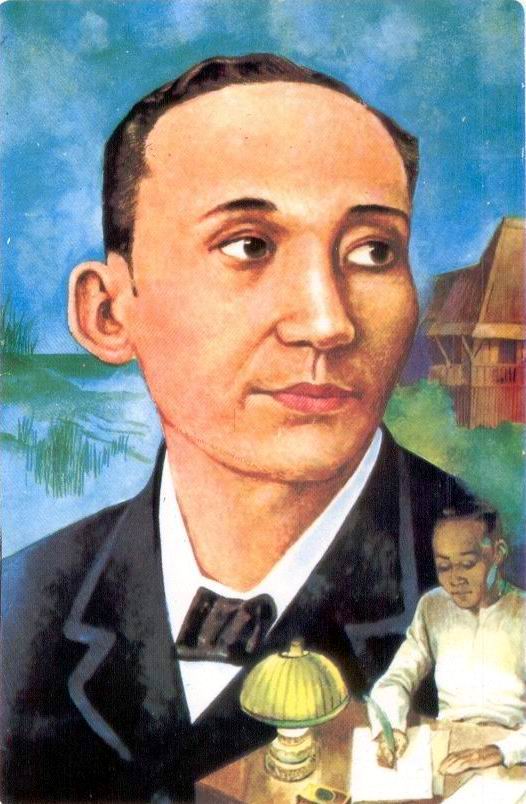
Heneral Emilio Jacinto
Ang pagsasabi na nakasasama ang kalayaan ay pagyurak sa diwang ipinaglaban ng mga bayani. Kahiya-hiya. Ang disiplina ay kaakibat ng Kalayaan, hindi kalaban nito! Hindi dapat isakripisyo ang kalayaan para lamang sa disiplina. Magkasama dapat ito. Sapagkat ang pagrespeto sa batas at ang pagrespeto sa karapatan ng iba ay tunay na pag-ibig sa bayan at sa kapwa.
Mula sa diary ni Pangulong Ferdinand Marcos
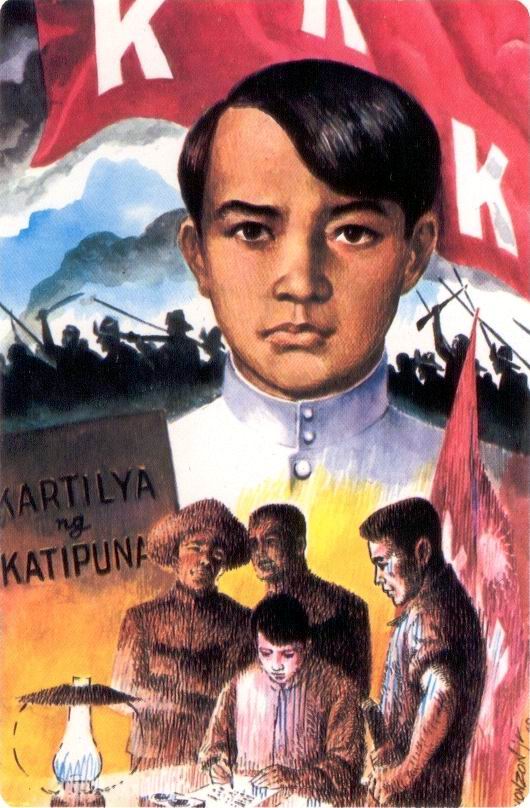
Which brings me to my next point. Sa sikolohiya ng mga sinaunang Pilipino, ang pagiging mabuti ay konektado sa pagkakaroon ng matuwid na kaluluwa na naka-align sa langit. Sa paniniwala ng mga Pilipino, konektado ang kaluluwa sa ginhawa. Dapat mabuti ang iyong kalooban at matuwid ang kaluluwa upang tunay na guminhawa. Kaya sa Katipunan, bago ka lumaban, kailangan munang pag-aralan mo ang Kartilya ni Jacinto na siyang nagtuturo ng tamang asal at pakikipagkapwa, “Ang di mo ibig gawin sa asawa mo, anak at kapatid, ay huwag mong gagawin sa asawa, anak at kapatid ng iba.”
Samakatuwid, ang pagiging mabuti o matuwid ay pinagmulan ng salitamg katuwiran na kapwa inuugnay natin sa pagkakaroon ng tamang pag-iisip at maging sa konsepto ng katarungan, na by the way, ay isang mas bagong term sa Filipino na galing sa salitang Bisaya na “tarong” na ang kahulugan ay matuwid rin.
Xiao Chua kasama si Vim Nadera at National Artist Virgilio S. Almario
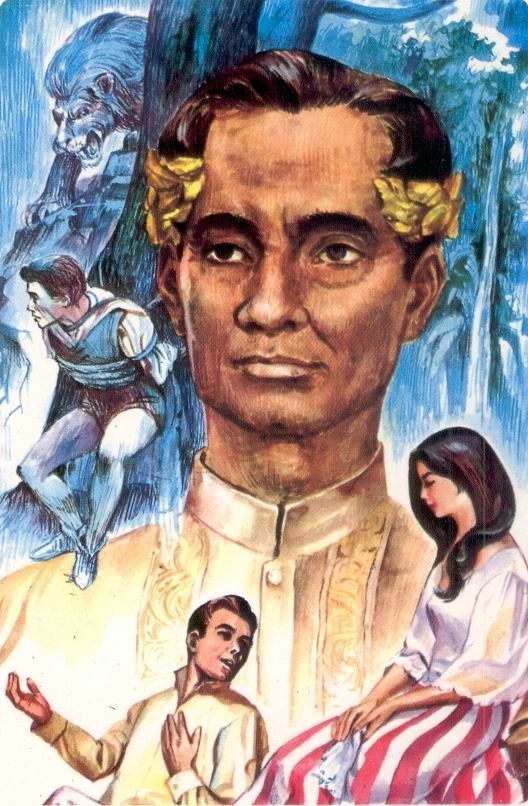
Sa mga sulatin ni National Artist Virgilio S. Almario, ipinapaliwanag niya na ang makatang si Francisco Balagtas ay isang bayani sapagkat ang mga konseptong ipinunla niya sa Florante at Laura ang siyang dinala ng mga bayaning nagluwal sa ating pagkabansa. Sa Florante, sinulat ni Balagtas ang nangyayari sa pagkatalo ng tinatawag na “santong catouiran” – “Ang magandang asal ay ipinupukol / sa laot ng dagat ng kutya’t linggatong; balang magagaling ay ibinabaon / at inililibing na walang kabaong.”
Francisco Balagtas
Florante at Laura
“Sa loob at labas ng bayan kong sawi, / kaliluha’y siyang nangyayaring hari, / kagalinga’t bait ay nalulugami,
/ ininis sa hukay ng dusa’t pighati.”
Sa pagkatalo ng katuwiran, ang kataksilan ang hari at pinapalakpakan, ang mabuting gawa ay ikinakahiya at pinarurusahan. Hindi ba at ito ang nangyayari sa panahon ng abuso sa karapatang pantao?
At kung may “human rights,” ipinakita rin ng ating mga bayani na may “human wrongs”—ano ang maling ginagawa sa tao. Sa isang tula na ipinapalagay na kay Pangulong Andres Bonifacio, ito raw ang ginagawa noong ng Madre España sa mga dumadaing sa mga problema ng lipunan:
Pangulong Andres Bonifacio (Obra ni Pablo Amorsolo)
“Gapusing mahigpit kaming lumuluhog; / Lamugin sa sikad, kulata at suntok, / Makinahi’t ibitin na gaya ng hayop; / Ito baga, Ina, ang iyong pag-irog?
“Ypabilanggo at saka sa dagat itapon; / Barilin, lasunin, patain sa gutom; / Sa aming Tagalog ito baga’y ampon, / ng Ynang maguiliw sa lahat ng kampon?”
Malinaw na ipinakita ni Andres Bonifacio ang tinutukoy ni Balagtas na pagkawala ng “santong catuiran” at ang hindi dapat na gawin sa isang kapwa tao.
Ngunit bakit pinapayagan ng maraming kababayan natin ang karahasan laban sa kapwa? Bakit marahas na rin tayo sa pagtrato ng ating kapwa sa social media dahil hindi lamang tayo naniniwala sa kanila. Sapagkat binigyan tayo ng ideya na dapat na ituring natin na “aswang” imbes na “tao” ang mga taong kalaban natin. Kailangang ituring kang aswang, upang tanggalan ka ng ginhawa. Hindi na tao ang tingin sa iyo. Ito ang ginagawa noon at ngayon sa mga kritiko ng pamahalaan, at gayundin sa mga adik na kung tutusin mas kailangan ng ating tulong upang mapagbago.
Study on Oil on Canvas, for the Philippine Revolution by Jorge Pineda (Courtesy of Leon Gallery)
Ngunit hindi ba marahas din ang ating mga ninuno na bagani o nangangayaw? Hindi ba marahas din ang tawag ng Katipon sa kanilang sarili. Kailangan ng konteksto: Sa panahon ng ating mga ninuno, totoong may karahasan ang pangangayaw o pangungubat ng ating mga ninuno sa kanilang mga kalaban. Pinupugutan nga nila ng ulo ang kanilang mga kalaban upang kunin ang “gahum” o “kapangyarihan” ng mga ito at iuwi bilang dangal ng bayan. Subalit kahit sa kanilang sinaunang sistema, may dinadaanan itong mga rituwal, kailangang makatuwiran ang dahilan ng pangungubat. Sa mga Katipon naman, panahon iyon ng himagsikan, karahasan ang sagot sa 333 taon nang kolonyalismo. Sa kanilang kaisipan, marahas sila sa kalaban ng kalayaan at sa mga sumuporta dito.
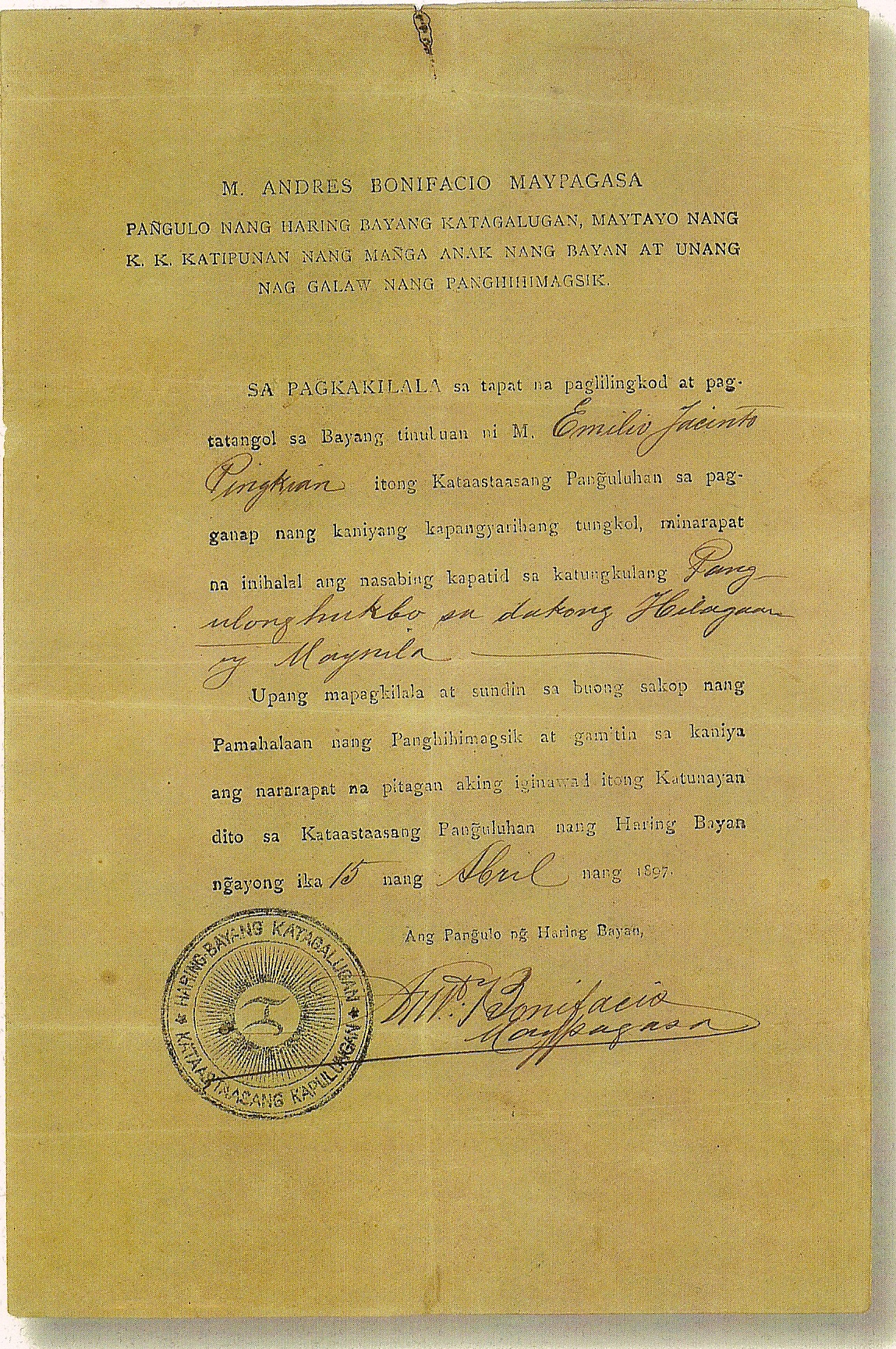
Ngunit kahit nga si Andres Bonifacio ay may konsepto ng demokrasya na nangmula sa Pilipino. Tinawag niya ang unang pamahalaang mapanghimagsik na “Haring Bayan.” Samakatuwid, ang bayan ang hari, na kung tutuusin ay katumbas ng Kapangyarihang Bayan o People Power.
Andres Bonifacio, Pangulo ng Haring Bayang Katagalugan
May proseso at konteksto ang karahasan ng mga nauna sa atin. Ang konteksto natin sa kasalukuyan ay mayroon tayong mga batas, mayroon na tayong mga proseso, mayroon na tayong estado na dapat nagpapadaloy ng proseso. Iyon dapat ang nagtatakda kung ang isang tao ay dapat tanggalan ng kalayaan o ginhawa.
Ngunit bakit tayo narito? Sa kabila ng People Power noong 1986, kung saan pinakita nating mga Pilipino ang pagmamahal natin sa demokrasya at kaparapatang pantao, tila ngayon isinusuka na ang mga ito ng marami? Bakit ganito na tayong mag-isip? Kailangan nating aminin na matapos ang himagsikan ng bayan, may ilan sa ating mga lider, pambansa man o loka, ang nakita natin na inabuso para sa sarili nilang kapakinabangan ang ating electoral system, ang ating justice system, ang ating political system. Kumbaga, nanaig ang elite democracy, demokrasya nga pero iilan lamang ang nananaig, interes lamang ng iilan ang nanaig. Sa kabila ng pagtatangka ng iba na maging mabuting mga pinuno, para sa marami, nakita nila na imbes na kapangyarihang bayan ay ginagamit upang pagsilbihan ang bayan, nagiging kapangyarihan ng may per ana nagsisilbi sa interes ng iilan. Imbes na ang kalayaan at demokrasya at magbunsod sa kaginhawahan ng lahat, nagbunsod ito sa kaginhawahan lamang ng iilan.
Hindi ganito ang tunay na demokrasya. Tulad nang ipinakita ng ating mga bayani, ang Kapangyarihang Bayan o Haring Bayan, ang pagtataguyod nang kung ano ang DAPAT para sa tao, ay nagdudulot ng kaginhawahan. Subalit mangyayari lamang ito kung gagawin natin ang ating bahagi.
Anlakas rin kasi ng pamana ng diktadura sa mga Pilipino, ang sentralisasyon ng kapangyarihan, imbes na sa mamamayan ito. Pinamalas niya na tulad daw ng sinaunang datu, siya lamang ang nagpapamudmod ng ginhawa at puwede namang magpatigil ng pagdaloy ng ginhawa
Tunay na may tendensiya ang mga Pilipino na sumandig sa mga malalakas na pinuno. Subalit kailangang liwanagin na hindi ibig sabihin na malakas na pinuno, o pamunuang datu, ay awtokratiko, sapagkat sa sinaunang bayan, ang datu ang pinakamagaling na bagani.
Ano nga ba ang “bagani”? Ang bagani ang sinaunang mandirigma sa ating mga ninuno. Ngunit ayon sa mga eksperto ng wika, ang “bagani” ay nagmula sa salitang Tagalog na “bayani,” Bahasa Malay na “Berani” at Austronesian o Javanese na “wani,” samakatuwid ito ay nasa wika na ng mga ninuno nating pinagmulan. Ang ibig sabihin ng “wani” ay tumutulong sa kapwa ng walang inaasahang kapalit, at ginagamit ang kakayahan upang ayusin ang kabuuan o ang lipunan. Kaya ang tawag natin sa government employee ay kawani ng pamahalaan.
Kaiba sa “Hero” ng Kanluran na ekstrardinaryo at may persona, ayon kay Zeus Salazar, hindi mayabang ang “bayani” sa Pilipinas. Siya ay may kababaang loob, laging kasama niya ang bayan, at nakatuon sa pagsusulong ng interes ng mga kasama.
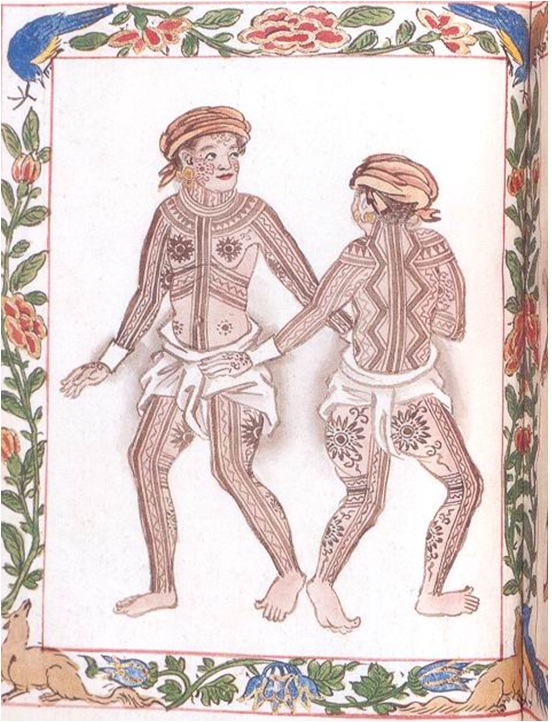
Bagani (Pintados) mula sa Boxer Codex of 1590
Kung ganito ang “bagani” at ang datu ang pinakamagaling o batikan (kasi maraming batek o tattoo) na “bagani” samakatuwid, ang datu ay hindi nagpapakasasa sa pagpapaibayo ng sariling interes kundi iniaalay ang sarili sa paglilingkod sa kapwa.
Hindi rin totoong awtomatikong ang mga anak ng datu ang nagiging susunod na datu, bagama’t ito ang kadalasang nangyayari. Ngunit nararapat na patunayan muna ng hahalili na mayroon siya ay magaling rin sa sandata at pamumuno. Kung hindi na nais ng bayan ang datu o ang kanyang angkan, hahamunin ang kanilang kapangyarihan sa pamamagitan ng sandata. Kaya sa diwa nito, oo nga’t pinapayagan ng bayan at inihahalal pa nga nila ang mga dinastiyang pulitikal, ngunit ito ay habang nakikita pa ng bayan na nagsisilbi pa sila para sa kanilang interes.
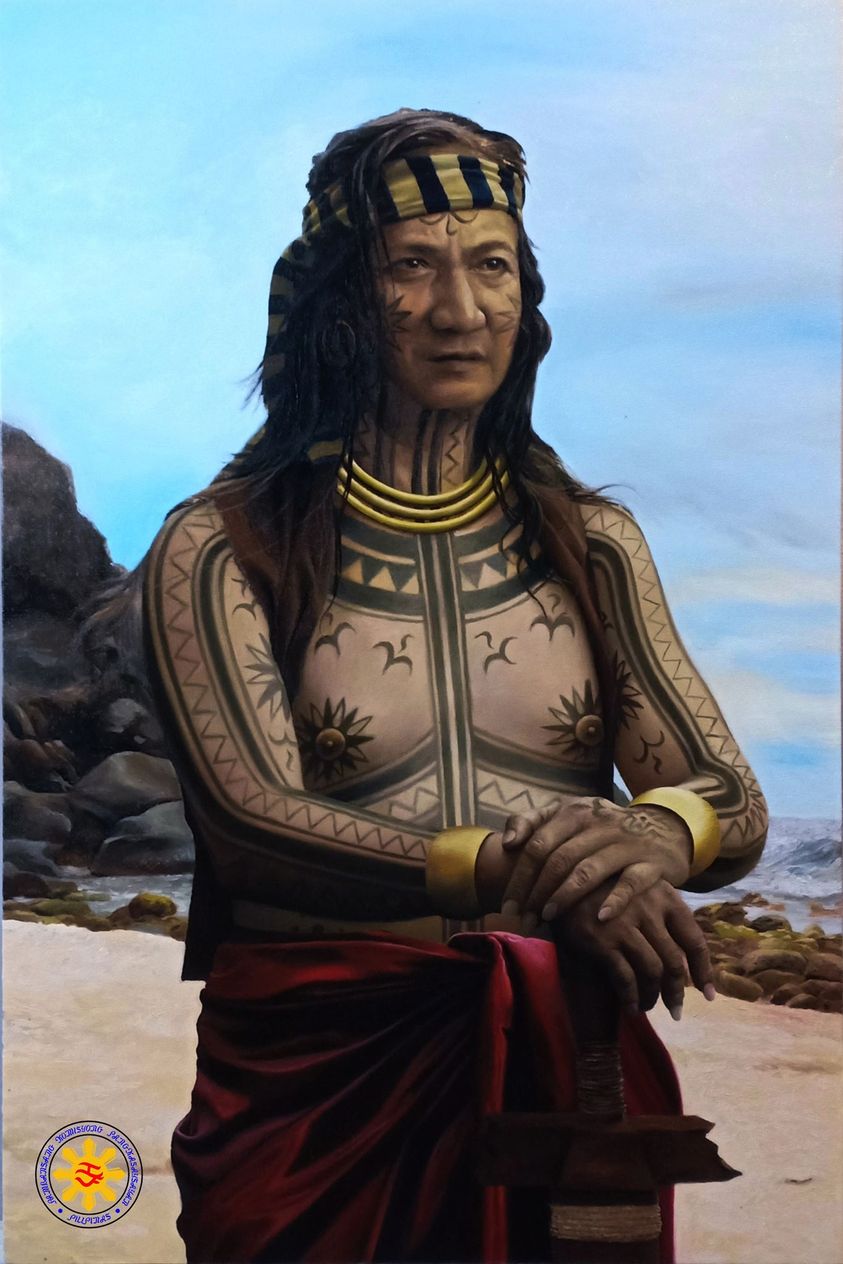
Datu Lapulapu ng Mactan, ang kanyang bayan ang tumalo kay Magellan, obra ni Carlo Caacbay
Ang datu ang nagpapadaloy ng ginhawa ng bayan, bagama’t siya ang may-ari ng mga lupa at mga bangka, hinahayaan niyang ito ay pakibangan ng bayan. Ito ang papel ng estado sa kasalukuyang panahon. At upang magkaroon ng tunay na kaginhawahan ang bayan, kailangan hind imaging dorobo, bagkus magkaroon ng katuwiran at mabuting kalooban ang mga pinuno.
Ngunit, huwag kayong magkamali, hindi natin pinapakahulugan dito na hindi dapat sugpuin ang kriminalidad. Ayon nga sa dakilang bayani na si Apolinario Mabini, “Kapag ang kapwa mo tao ay …pinagtatangkaang lipulin ang iyong buhay at kalayaan at pag-aari, ay dapat mo namang ibuwal at lipulin siya.” Ngunit ano kaya ang ibig sabihin ng salitang ibuwal. Patayen??? Abogado si Mabini, nainiwala siya sa proseso ng batas. Makatuwiran.
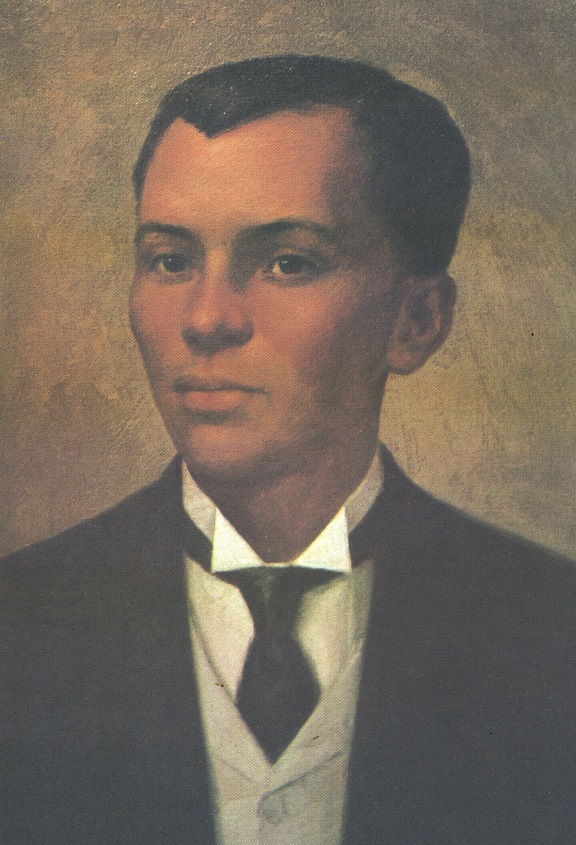
Apolinario Mabini
Muli, ang pagkakaroon ng strong leader ay hindi nangangahulugang diktadura, kundi ang paggamit ng malakas na kapangyarihan sa tama at nararapat: ang proteksyunan ang dapat na kaginhawahan, ergo, ang karapatan ng mamamayan.
Paano kaya natin matutugunan ang malaking kabalintunaan na kailangan natin ng awtokratikong mala-diktador na lider at hindi natin kailangan ang karapatang pantao.
Tulad ng nabanggit, ang malaking kabalintunaan ay nagmula rin naman sa ilang katotohanan. Hindi dapat natin sisihin ang bayan kung naging walang silbi ang tingin nila ukol sa demokrasya at karapatang pantao. Ito ay produkto ng kanilang mga nakita at naranasan matapos na maibalik sa atin ang demokrasya.
May narinig ako na mga nagbibigay daw ng “voters’ education” to make our voters “smarter” raw. Umaalingasaw ang elitismo ng ilan sa atin kahit na maganda ang ating hangarin. Hindi nakatutulong ang insultuhin ang bayan sa kanilang paniniwala. Hindi nakatutulong na sila at tawaging “bobotante” o ignorante. Inuulit ko, ang kanilang mga pananaw ay produkto ng ng historikal na karanasan.
Hindi elitismo ang dapat na isagot, iyon bang ang tingin lang natin sa demokrasya ang tama. Ang dapat na sagot natin ay ipakita ang tunay na demokrasya, na ang kahulugan ay isang tunay na talastasang bayan na naiintindihan ng mamamayan. Tingnan natin ang kanilang pananaw, at patuloy natin silang iengage ng may paggalang at pakikipagkapwa ang kahulugan ng demokrasya ngunit dapat ito ay magkasaysay sa kanila.
Sa makatuwid, kulang ang diskurso ng pagpapakita lang na kailangan natin ng demokrasya at karapatang pantao, kailangang dalhin natin ang usapin sa kung papaanong ang paggalang sa karapatang pantao, demokasya at kalayaan ay dapat magdulot ng kaginhawahan.
Nagsisimula ito sa tunay na desentralisasyon, ang gamitin ng mga lokal na pamahalaan ang kanilang mga kapangyarihan sa Local Government Code upang hindi na umasa ng todo sa pambansang lider lamang at gamitin ang kanilang autonomy sa pagpapaunlad ng sariling mga lalawigan at lokalidad.
Ang mga hakbang na ito ay hindi madali, malaki ang gawain. Hindi man tayo magwagi ngayon, kailangan natin magpunla para sa panahon na darating na ang pagsibol ng Kalayaan at kaginhawahan sa bayan. Huwag tayong panghinaan ng loob, kailangan lang nating magsimula sa ating kalooban, hindi man tayo perpekto. Magsisimula tayo sa pag-ibig sa bayan, samakatuwid, pagrespeto sa kakayahan na maintindihan ka ng kapwa mo Pilipino.
Sapagkat kung tayo mismo ay hindi natin nirerespeto ang kapwa natin at ang kanyang kakayahan at karapatan, ang Bill of Rights o ang Katipunan ng mga Karapatan at ang ating Saligang Batas ay isang walang saysay na kapirasong papel lamang. Hindi totoong hindi buhay ang konsepto ng human rights sa mga Pilipino, sapagkat TAYO MISMO ang Katipunan ng mga Karapatan.
(Written for Prof. Patricia Mae B. Jurilla’s Communication II I class in the University of the Philippines at Diliman, second semster, A.Y. 2001-2002. Uploaded to commemorate the 20th anniversary of George Harrison’s death)
“In every mistake we must surely be learning.”
-George Harrison
“Kahit kailan, ‘di kita iiwan….” South Border sang in front of screaming fans. It was 30 November 2001 (29 November in London), Friday, I was watching their concert at the Ultra. I received a text message from my best friend and fellow Beatlemaniac, Mayo Baluyut.
I shouted, “Shit!”
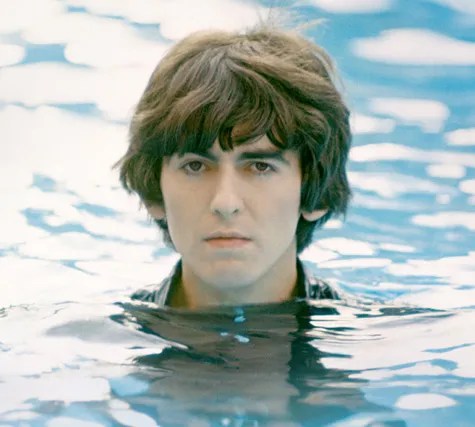
George Harrison, the Quiet Beatle, was dead!
Weeks ago, Mayo and I were just joking about the way George acted in Beatles performances. He looked dumb and without self-esteem, in comparison to Lennon and McCartney beside him.
After the concert, I went to my Uncle Jimmy’s home and stayed awake in the wee hours of the morning, watching the cable news. Celebrities and world leaders gave their tributes to the youngest Beatle, from Michael Jackson to British Prime Minister Tony Blair to Her Majesty The Queen.
Beatle Paul McCartney said of him, “He was a lovely guy and a very brave man and had a wonderful sense of humor. He is really just my baby brother” (qtd. in “Harrison died” A27).
Ringo Starr, the other surviving Beatle, said, “We will miss George for his sense of love, his sense of music and his sense of laughter” (qtd. in Sullivan 61).
Bob Dylan, legendary singer-songwriter who was with George in the group Traveling Wilburys, said in a statement, “George was a giant, a great, great soul with all of the humanity, all of the wit and humor, all the wisdom, the spirituality, the common-sense of a man and compassion for people” (qtd. in “Harrison died” A27).
Yoko Ono, the widow of murdered Beatle John Lennon, said, “Thank you George, it was grand knowing you” (qtd. in “Fans Worldwide A10).
He left behind his wife Olivia Arias and his son Dhani, who released this statement; “He left this world as he lived in it, conscious of God, fearless of death, and at peace, surrounded by family and friends. He often said, ‘Everything else can wait but the search for God cannot wait, and love one another’” (qtd. in “George Harrison” A1).
Listening to all these tributes coming from those close to him, I started to think, maybe there’s more to George Harrison than just being this dumb-looking Beatle. So I went back to things written about him and The Beatles and most importantly, remember his life as his own man.
The Beatles (clockwise from top left): Paul McCartney, Ringo Starr, John Lennon, and George Harrison, 1965. PRNewsFoto/Apple Corps Ltd./EMI Music/AP Images
George Harrison, the lead guitarist of the greatest rock and roll band in history, The Beatles, was born on 25 February l943 in Liverpool, England. “The only Beatle whose childhood was not marred by divorce or death” (“Remembering” 63). He was fifteen when he joined John Lennon and Paul McCartney in the Quarry Men, making him the youngest in the group. It was George who actually taught Lennon in playing the guitar (“George Harrison” A20). As the Silver Beetles, they worked in Hamburg, Germany, “played a thousand gigs…played eight hours straight” (Achenbach 195). Moreover “authorities discovered that Harrison, at 17, was too young to be working in the Reeperbahn nightclubs. They had him deported” (Sullivan 63). When The Beatles released “I Want To Hold Your Hand” in l964, they penetrated America and hit it big in the whole world! Suddenly, they were touring around the world and playing in front of screaming crowds. When they grew tired of Beatlemania, they quit touring in l966 and began experimenting in the studio. In Lennon’s “Norwegian Wood”, George introduced the sitar in Beatles music, having learned it from the guru, Ravi Shankar. Under the influence of drugs, The Beatles recorded the albums Revolver and Sgt. Pepper’s Lonely Hearts Club Band. Under the influence of Eastern religion, they made The Beatles, more popularly referred to as The White Album. The Lennon-McCartney songwriting partnership overshadowed George’s skills. Yet he came out with such classics as “While My Guitar Gently Weeps”, “Here Comes The Sun”, and “Something”. After The Beatles broke up in l970, his song “My Sweet Lord” topped the charts. When flood and famine ravaged Bangladesh, he had grown tired of people saying “But what can I do?” So he organized The Concert forBangladesh and became the pioneer rock philanthropist, setting the trend for Live Aid and We Are The World (Sullivan 65). In the last days of 1999, “Harrison was stabbed and seriously wounded in the chest by an intruder who broke into his ansion overnight” (“Ex-Beatle” A1). The attacker, Michael Abram, “had shown signs of a Beatles obsession” (“An Attack” 5). Thank God, George survived when his wife Olivia “ended the assault by hitting the attacker on the head with a bedside lamp, knocking him unconscious” (McAllister 24). But his worsening throat cancer couldn’t be stopped from taking George Harrison from us. He died at 58. Although he was gone too soon, it was less a shock compared to Lennon’s murder. Richard Lacayo, Time reporter, wrote, “It is more in the ordinary course of things, a reminder that the simple passage of time is all that will be needed to complete the work that Mark David Chapman began, subtracting The Beatles from the world” (61).
That night, while I was lying in my dormitory bed, the desire to know more about the man came to me. Suddenly, a white cloud appeared around me and transported me to a hotel room with George Harrison himself. I was hoping to find answers in his own words.
“Good evening! Have a seat!” He welcomed me with a smile.
I told him, “I’m Xiao Chua from the Philippines!”
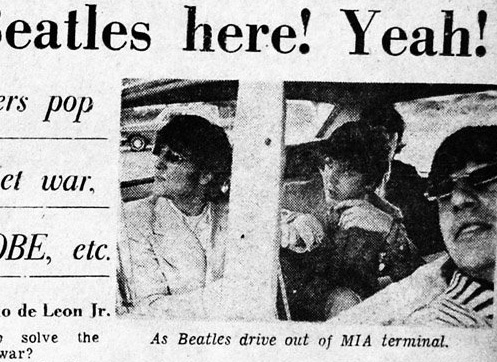
“The Philippines!” He exclaimed. And he began relating to me The Beatles arrival in Manila, “As soon as we got there it was bad news… We were…bullied for the first time. It wasn’t respectful…it was a very negative vibe from the moment we got off the plane, so we were a bit nervous” (The Beatles 217).
I asked him, “Did you intend to snub the Marcoses when you didn’t appear at the courtesy call in the presidential palace?”
Paul McCartney and George Harrison in Manila
He answered,
That’s how they decided to present it. Nobody ever said, “Well, they were never asked….” The whole place turned on us. We had people yelling and screaming when we tried to get to the airport. Nobody would give us a ride… Finally, somebody managed to get a car… We were driven to the airport. We were all carrying amplifiers and suitcases—nobody was helping us to do anything—but the mania was going on with people trying to grab us, and people trying to hit us. (The Beatles 220)
He added, “We came [t]here to sing. We didn’t come [t]here to drink tea and shake hands. We didn’t even want to come [t]here” (qtd. in Ocampo 122).
I shifted to another topic, “What did you feel when you guys split?”
He recalled, “My feelings when we went our separate ways was to enjoy the space that it gave me. The space to be able to think at my own speed and to have some musicians in the studio who would accompany me on my songs” (The Beatles 349).
I asked him, “What do you feel as a Beatle?”
He answered, “In reality, The Beatles exist apart from my Self. I am not really ‘Beatle George’. ‘Beatle George’ is like a suit or shirt that I once wore on occasion and until the end of my life people may see that shirt and mistake it for me” (qtd. in Giles 44).
Having read that “He often said that his luckiest break was joining the band and his second luckiest was leaving it” (Sullivan 62), I asked him, “So you’re the most reluctant Beatle?”
He answered, “Being a Beatle was a nightmare, a horror story. I don’t even like to think about it” (qtd. in Sullivan 62).
I interrupted, “Why is that?”
He continued, “In the big picture it doesn’t really matter…whether you’re the king of a country or you’re the Sultan of Brunei or you’re a fabulous Beatle; it’s what’s inside that counts” (The Beatles 355).
I asked him, “Any message for the fans out there?”
He told me, “I’d like to think that the old Beatle fans have grown up and they’ve got married and they’ve all got kids and they’re all more responsible, but they still have a space in their hearts for us” (The Beatles 357).
I wish that our conversation would last, but to end I told him, “Thanks George, I really appreciated it!”
He replied, “Thanks, too, for the visit, Xiao, Hare Krishna!”
And I woke up. It was already Sunday morning. I rose from my bed, played my cassette and listened to the music of Harrison.
Pondering his songs, I realized that his music, in his own write, reflected his feelings and persona. I found out that we have the same personality in one aspect. We’re both individualistic. “As the ‘quiet’ Beatle and his public image was summed up in the first song he wrote for them (The Beatles), ‘Don’t Bother Me’” (“George Harrison” A20). The lyrics say, “So go away, leave me alone don’t bother me” (Lennon, et al. 41). Even the last recorded song of The Beatles was a George Harrison composition entitled “I, Me, Mine”.
His music was also powerful. As lead guitarist of The Beatles, the sound of his lead stood out in the ad-lib of “Can’t Buy Me Love” and will haunt you in “Something”. Although not as great as Eric Clapton’s godly lead, Harrison’s fine lead was powerful enough to move listeners (Clapton played the lead in Harrison’s “While My Guitar Gently Weeps”. He also became the husband of Harrison’s first wife, Patti).
His music was also spiritual. His belief in Eastern religion, which he clung to ‘til death, was reflected in his music. He sang his philosophies and played the sitar in “Within You Without You” and “The Inner Light”. Most of his later songs dealt with his search for God. His solo hit “My Sweet Lord” had these lyrics, “I really want to see you Lord” (qtd. in “Remembering” 78). And so was “Give Me Love”, “My Lord, please take hold of my hand that I might understand you” (qtd. in “Remembering” 77). He was actually more spiritual than Lennon, whose being Atheist was reflected in his songs such as “Imagine” and “God”.
His music was also immortal. Harrison’s music achieved it with his finest song, an idyllic love song for his first wife, “Something”. “With more than 150 versions recorded, “Something” is the second-most-covered Beatles song after “Yesterday”. But a measure of Harrison’s obscurity with the band is that Frank Sinatra used to introduce “Something” as his favorite Lennon-McCartney tune” (Sullivan 65). But still, I would agree with Sinatra when he described it as “The finest love song ever written” (qtd. in “Fans Worldwide” A10).
Obscure he was. As John Lennon said of George after the break-up, “His talents have developed over the years and he was working with two f__king brilliant songwriters, and he learned a lot from us. I wouldn’t have minded being George, the invisible man, and learning what he learned. Maybe it was hard or him sometimes because Paul and I are such egomaniacs, but that’s the game” (qtd. in Giles 44). But as Robert Sullivan, another Time reporter, puts it, “He was the Quiet Beatle only in that he was standing alongside two louder-than-life characters and in front of a guy playing drums” (62). Because after the Beatles broke up, he released All Things Must Pass, which was three records long. “The sheer volume of material on that l970 release confirmed the feelings of Harrison’s fans that he was being stifled in the Beatles” (“George Harrison” A20). To Jeff Giles, Newsweek reporter, “That was Harrison’s creativity extending its middle finger” (44).
I suddenly began to admire him for being a songwriter and seeker as well. When “what he hoped to learn, The Beatles couldn’t teach” (Giles 44), he wandered to find his spirituality through introspection, as he sang in “The Inner Light”, “Without going out of my door, I can know all things on earth… The farther one travels, the less one knows” (Lennon et al. l60).
In “All Things Must Pass”he sang, “Sunrise doesn’t last all morning…It’s not always going to be this gray. All things must pass, all things must pass away” (qtd. in “Remembering” 75). Lacayo reflected on its relevance at times such as these, “All things must pass, he said. O.K., we say back. O.K., we know. We have lived through September ll. We have seen things pass. We listen to his song differently now, cherishing it as a warning against old complacencies and a promise that the darkness of this moment too shall pass” (6l).
That night, I lit a candle as my own tribute to George. It’s time to give due respect and recognition to the most neglected Beatle for giving us the legacy of his music. He may look dumb, but looks can deceive. The depth of his mind and the maturity of his spirit are reflected in his music. Listening to that music makes me feel good, sometimes spiritual, sometimes sublime, but always timeless. He and The Beatles are timeless anyway. The fact still amazes me, that these powerful, spiritual, and immortal sounds were produced in the silence of George Harrison, the Quiet Beatle, musician, and most of all, seeker. At last, in the cold silence of the night, Something was heard!
26 January 2002
WORKS CITED:
Achenbach, Joel. “The Beatles.” Why Things Are. New York: Ballantine Books, l99l. 191-20l.
“An Attack On A Beatle.” Newsweek 10 Jan. 2000: 5.
Beatles, The. The Beatles Anthology. San Francisco: Chronicle Books, 2000.
Katitikan ng Pagpapahayag ng Pagsasarili ng Bayang Filipino (Mula sa National Historical Commission of the Philippines), salin ng Acta de la Proclamacion de Independencia del Pueblo Filipino.