IT'S XIAOTIME!

Naglilingkod sa Diyos at sa Bayan sa pagtuturo ng Kasaysayan

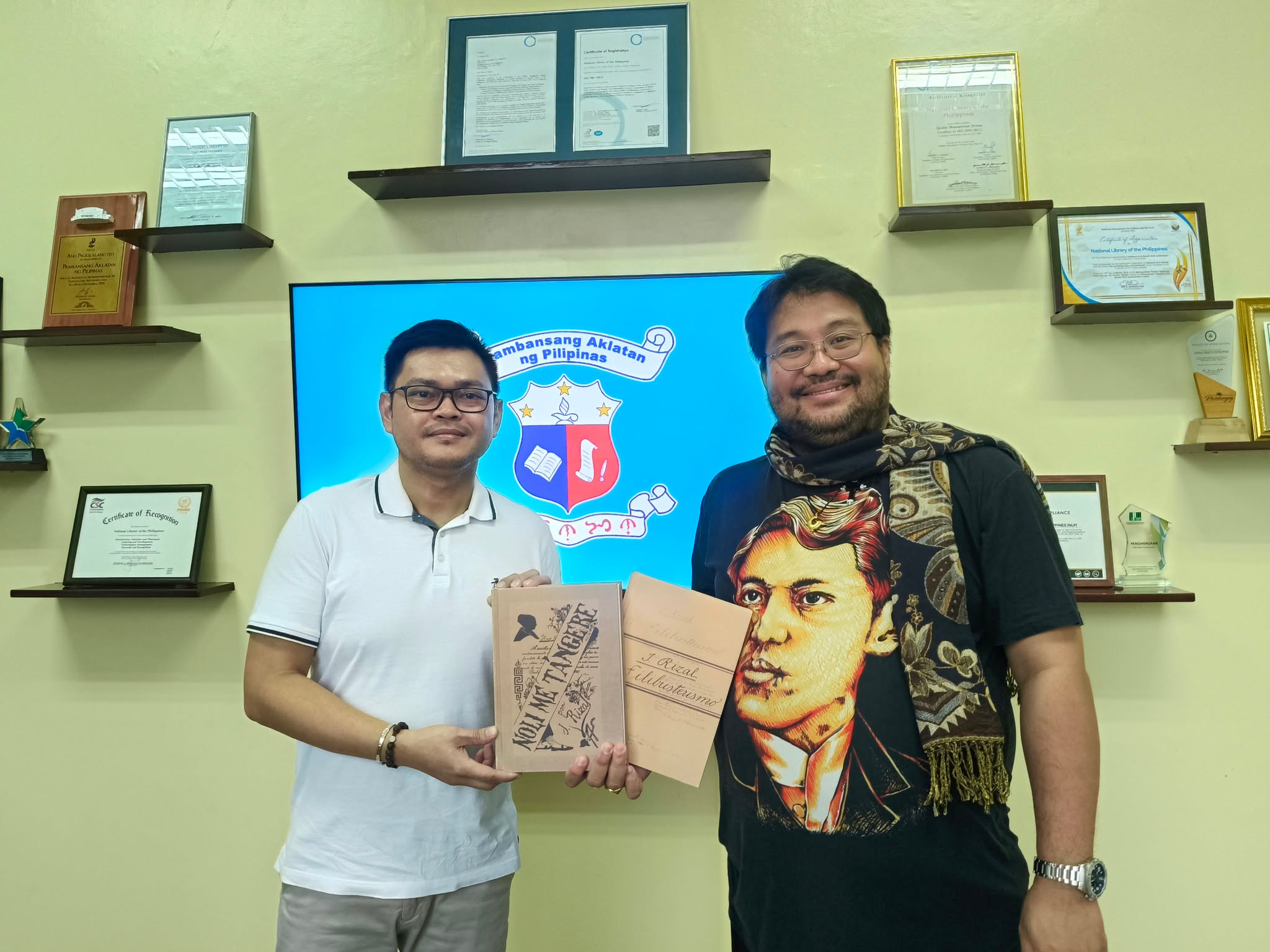
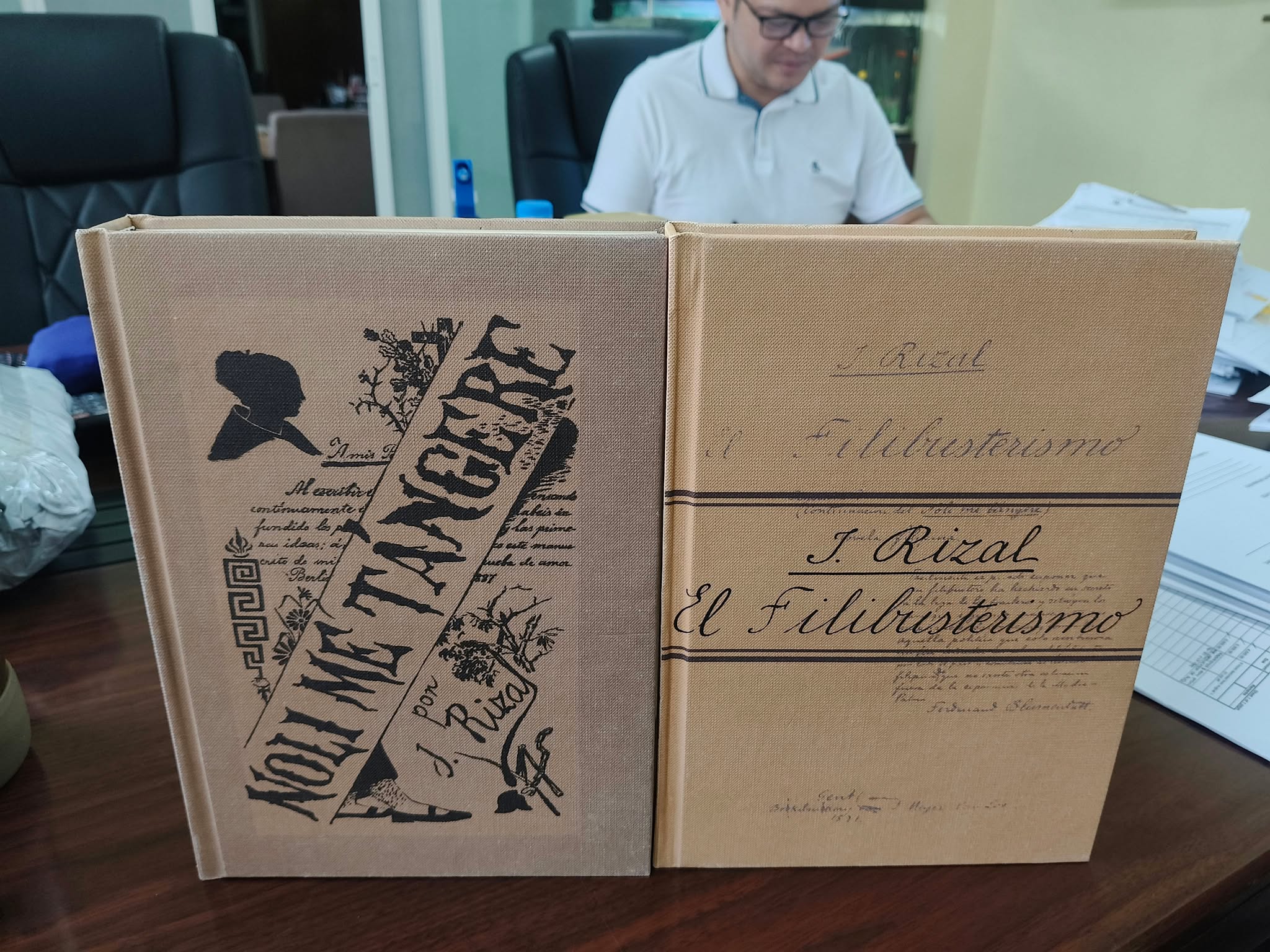
Introduction to the National Library of the Philippines El Filibusterismo mini-facsimile

Prof. Michael Charleston “Xiao” Chua, Ph.D., Historian (COS), National Library of the Philippines

José Rizal’s El Filibusterismo is a sequel to his first novel, Noli me Tangere, which Penguin Classics declared as the first major artistic manifestation of Asian resistance against European colonialism.  Hence, both are important not only in the formation and imagineering of the Filipino nation but also in the story of anti-colonial and anti -imperialist struggle in our continent.

According to Floro Quibuyen, in his book A Nation Aborted: Rizal, American Hegemony and Philippine Nationalism, when Rizal was asked by his brother Paciano to go to Spain in 1882, he was told by his brother that “the principal purpose” of his trip was not just “to finish this [medical] course but to study other things of greater usefulness.”  This implies that the creation of a study or a work representing the past and the present of the islands at that time was their main objective.  Hence, the Noli, the El Fili and the historical annotations to the Sucesos de la Islas Filipinas of Antonio de Morga were really the fulfillment of Rizal’s dream project.

To underscore the importance of these works, the first edition of the annotations to the Morga, and the original manuscripts of the Noli me Tangere, the El Filibusterismo and the “Mi Ultimo Adios” (Rizal’s last farewell) along with the Proclamation of Independence, the Trial of Andres Bonifacio and the 1734 Murillo-Velarde Philippine Map, are now displayed at the National Library of the Philippines Permanent Gallery which came to life as an initiative of the NLP Director Cesar Gilbert “Jet” Q. Adriano in 2024.

The historian Augusto de Viana pointed to me that looking at the manuscript of the Noli, one may notice Rizal’s signature handwriting was still flowing.  To cut the cost of printing, he placed lines on the side of the ejected manuscript on Elias and his lover Salome, but still readable.  The story was more playful, more satirical.  But the manuscript of the El Fili tells a different story, the flowing handwriting had become more pointed.  At first, perhaps knowing he will have lots of paper, he was just using the front side.  Eventually, he will use the back pages and will have so many ink erasures in the text, many times whole pages, that will not be easily recoverable.  It was an angrier novel, owing to the context of the Rizal family’s expulsion from the Calamba friar land in 1890, and the lack of funds owing to friends who promised support for the writing of the novel but did not fulfill them.  His depression often makes him want to burn the manuscript but the novel was saved by the financial help of his Kapampangan friend Valentin Ventura and the novel was published in Ghent, Belgium in 1891.

Crisostomo Ibarra, Noli me Tangere’s protagonist, re-emerged as Simoun in the El Filibusterismo.  His main goal is to agitate the people to rise up against the Spanish colonizers, hence the term “filibuster” which in the Spanish colonial context meant a rebel.  Simoun eventually failed and this was read by many as Rizal’s warning against a revolution, being a reformer and a pacifist.  That the Fili was an anti-revolution novel.   But reading José Alejandrino’s memoir The Price of Freedom, Rizal perhaps had a different message.  Being his roommate in Belgium while finishing the novel, Rizal reportedly told him, “…I regret having killed Elias instead of Crisostomo Ibarra; but when I wrote the Noli Me Tangere, my health was badly broken and I never thought that I would be able to write its sequel and speak of a revolution. Otherwise, I would have preserved the life of Elias, who was a noble character, patriotic, self-denying and disinterested— necessary qualities of a man who leads a revolution—whereas Crisostomo Ibarra was an egoist who only decided to provoke the rebellion when he was hurt in his interests, his person, his loves and all other things he held sacred. With men like him, success cannot be expected in their undertakings.”    Rizal was not totally anti-revolution.  As Rizal’s great grandniece Gemma Cruz Araneta puts it, “It is a novel on how not to wage a revolution” if it is only about selfish interests. 

The public historian José Victor Torres had another insight from his paper “A la Juventud de Filibusteros” (an allusion to Rizal’s poem “A la juventud Filipina”), that the author may be alluding to another revolution in the title of the novel, not a bloody one, but the one initiated by young people in the universities like Basilio and Isagani.  A peaceful revolution through education.

But Rizal, through Simoun, had a warning: “A, kayong mga kabataan! Nanaginip pa rin kayo! …Gusto n’yong maging mga Kastila din kayo, pero hindi n’yo nakikitang ang pinapatay n’yo ay ang inyong pagkabansa! Ano ang inyong magiging kinabukasan? Isang bansang walang pagkatao at kalayaan? Lahat sa inyo ay hiniram, pati na ang inyong mga depekto. Mamamatay kayo bago pa man dumating ang inyong kamatayan!”

It should be a truly Filipino education that make us love our country, love that will make us give our efforts for her, as Rizal wrote in this novel, “It is a useless life that is not consecrated to a great ideal. It is like a stone wasted on the field without becoming part of any edifice.”

May the pages of this facsimile copy inspire you to contribute a stone to the edifice of the nation, just like Rizal did.
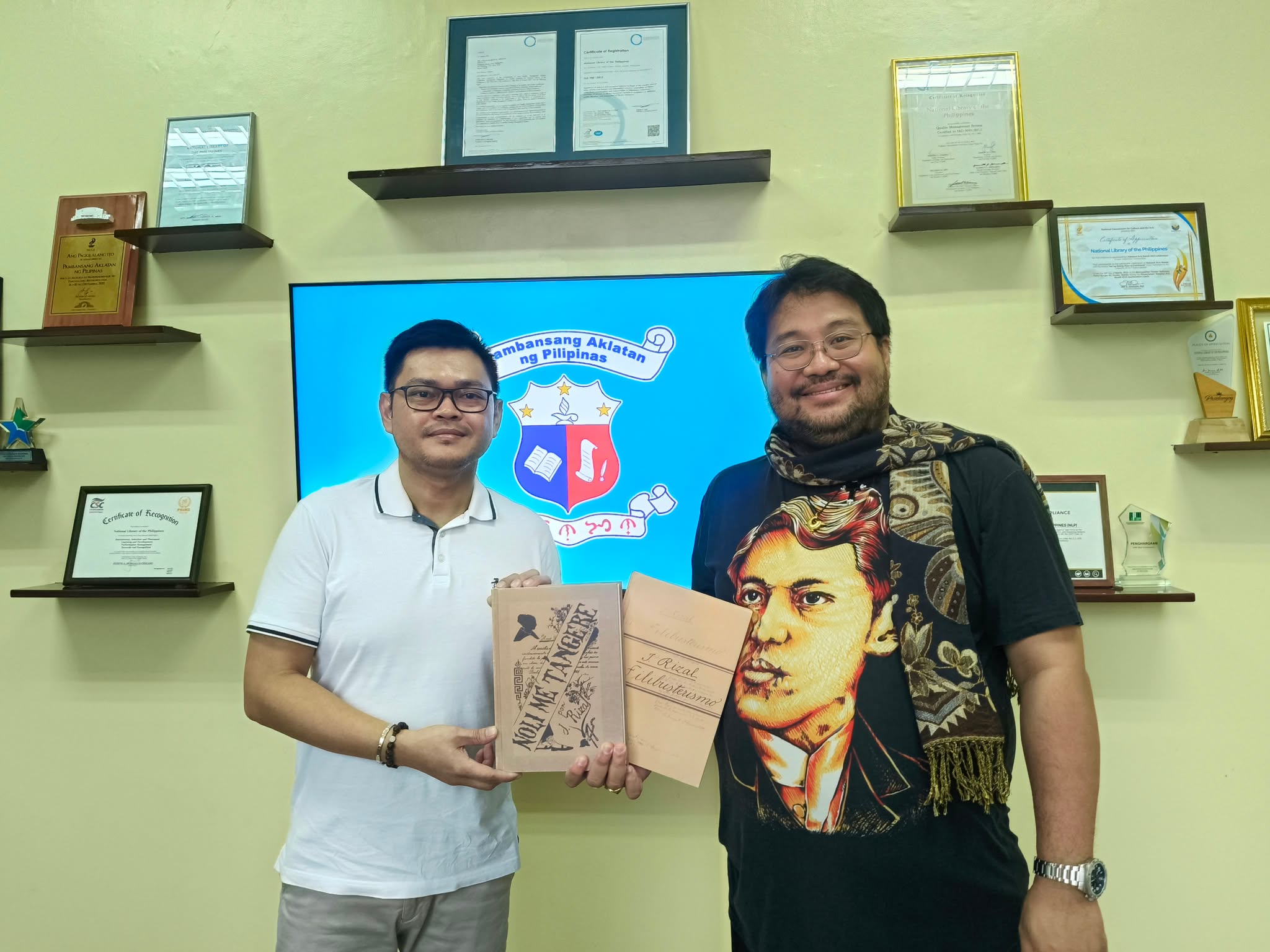
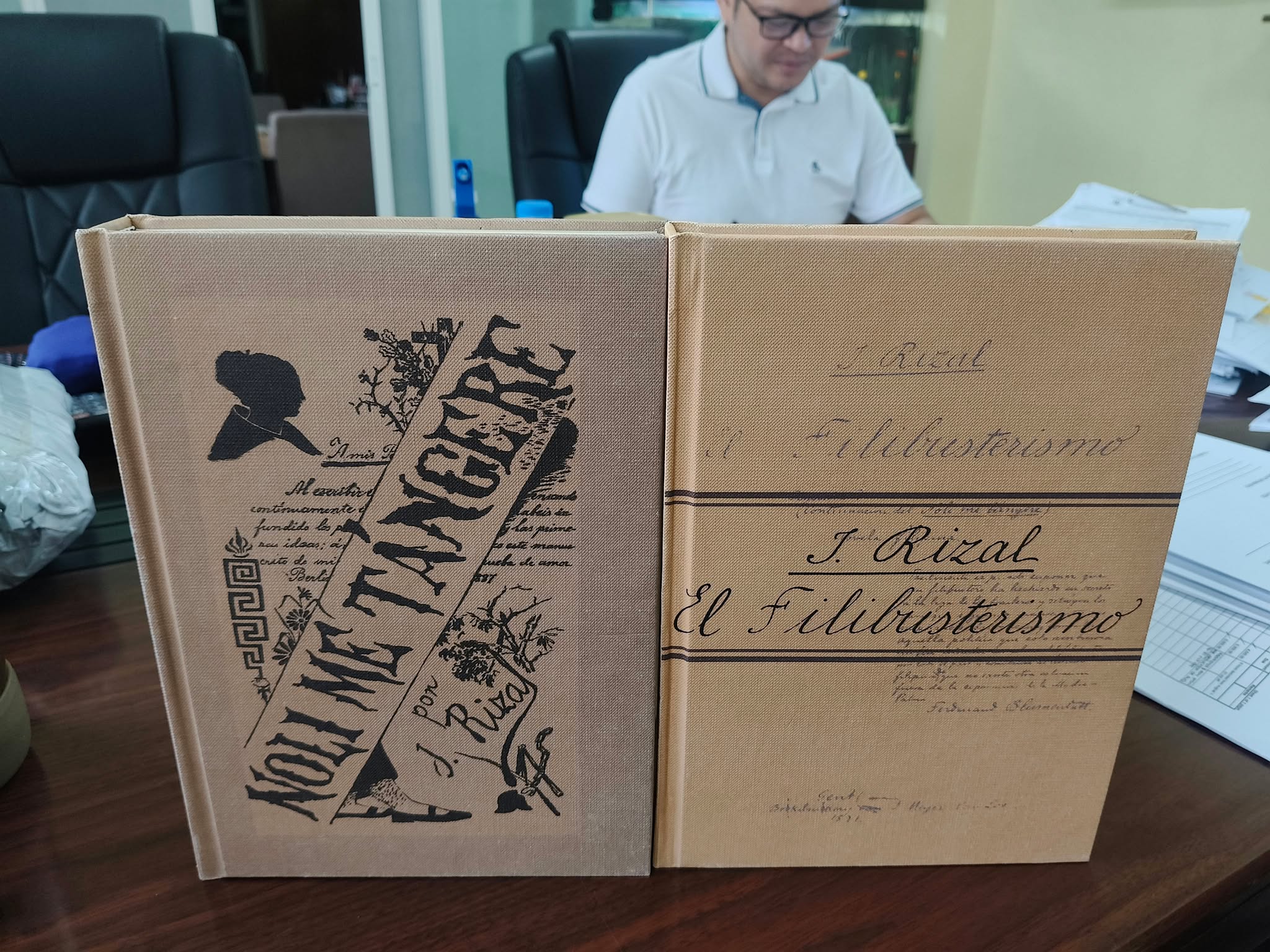
Introduction to the National Library of the Philippines Noli Me Tangere mini-facsimile

Prof. Michael Charleston “Xiao” Chua, Ph.D., Historian (COS), National Library of the Philippines

The National Library of the Philippines is delighted to present to the nation a more affordable facsimile copy of one of our greatest documents, José Rizal’s original manuscript of the Noli Me Tangere, which is in the possession of this institution and through the initiative of the NLP Director Cesar Gilbert “Jet” Q. Adriano is now displayed in the new NLP Permanent Gallery along with other important documents of our nationhood.

Penguin Classics dubbed the novel as the first major artistic manifestation of Asian resistance against European colonialism.  But many credited the novel, and its creation, as one of those that helped us become a nation.  According to Setsuho Ikehata and Benedict Anderson, Rizal helped the indios throughout the archipelago realize they had a common misfortune. They may not have read the novels themselves, but those who did told others about Ibarra, Maria Clara, Elias, Sisa, Crispin and Basilio, Padre Salvi, Padre Damaso, Doña Victorina, and others.

From being mere Tagalogs, Cebuanos, Ilocanos, Kapampangans, Bicolanos, etcetera, we developed a common national sentiment and were able to identify with each other and finally see our problems in our own lens, which eventually united us and urged us to fight.

Rizal went to Europe in 1882 to actually fulfill a dream project that would write about the culture and history of the Philippines with his friends, the ilustrados.  But them seem to not be interested.  Frustrated, by the end of 1884, Rizal embarked on fulfilling the mission himself. He had already begun writing what would become his first novel in Madrid, then in Paris in 1885 and then in Wilhelmsfeld, Germany, by April to June 1886. He made in the Noli a study of the contemporary society of that time and fictionalized it.  There was the story of a bell-ringer who was reportedly killed under the care of Father Antonio Piernavieja’s sacristan in San Rafael, Bulacan, which became the story of Crispin.  There was the story of a bell-ringer who was reportedly killed under the care Father Antonio Piernavieja, which became the story of Crispin.  There was also the story of Sor Josefa Estrada de San Rafael of San Simon, Pampanga, who, in 1881, was seen at the top of the Franciscan Abbey of Sta. Clara in Manila after she was molested by a priest.  This became the “mad nun” at the postscript of the novel, believed to be Maria Clara.

But although the characters were caricatures, they reflected the reality of the ill effects of colonialism, demonstrating the role of the artist and social scientist in the making of the nation. Hoping it would help change people’s minds. 

In Berlin, he struggled to correct his manuscript in the midst of winter. He felt sick and thought he had tuberculosis. By Christmas, Dr. Maximo Viola came and examined him and concluded that Rizal’s assumptions were wrong. Rizal was only undernourished.

Aside from his health, Rizal worried about how he could pay for the printing of his book. He asked his brother Paciano for 300 pesos for the printing, but it all went to food and lodging. In a letter to a friend, he said later that he did not believe his book would ever be published. “I was on the point of throwing my work into the fire as a thing accursed and fit only to die,” he wrote.

Viola, who gave the depressed man some money for his expenses, also offered to pay for the whole cost of printing 2,000 copies to a reluctant Rizal. He finally agreed to accept 300 pesos as a loan rather than a gift.

At the cost of a lot of personal sacrifices on the part of the author, the Noli Me Tangere was published on March 21, 1887 in Berlin. The first copies were sent to the author’s friends and was received well. He was only 25 years old.

But the person who could be considered the first external reviewer of his self-published work was the printer’s man himself. Rizal’s biographer Austin Coates wrote: “Though no one in the printing house spoke proper Spanish, they had realized that the work they were producing was dynamite. To Rizal and Viola, the printer’s man expressed the view that if the author of the book were to go back to the Philippines his fate would certainly be—and he drew his hand across his gullet.”  After nine years, Rizal was executed by the Spaniards.

Looking at the manuscript itself tells us a few more contexts:  Ambeth Ocampo said that the signatures you will see at the side of the pages of manuscript would remind us of the role of German women in transcribing it for printing.  To also cut cost, he did not include one chapter in the publication—“Elias and Salome”—but is still here, indicated by long lines in the side of its pages.

In 1912, an English translation of the novel by Charles Derbyshire was named The Social Cancer and not the literal translation of the Latin, “Touch me not.”  Rizal wrote Félix Resurrección Hidalgo in 1887 saying that the title Noli me Tangere were taken from the Gospels.  But what is it not to be touched?  Rizal’s dedication for his country reads, “Recorded in the history of human suffering are cancers of such malignant character that even minor contact aggravates them, engendering overwhelming pain…. Therefore, because I desire your good health… I will do with you what the ancients did with their infirmed: they placed them on the steps of their temples so that each in his own way could invoke a divinity that might offer a cure.”

So, it is a cancer.  Later, I read from old medical books that the “Noli me Tangere” itself is actually a name of a skin cancer in the eyelids also called lupus erythematosus. 

Rizal, the ophthalmic surgeon, knew that the ills he exposed on the steps of the temple that he wanted to cure would just explode. Rizal hoped that when it did, Spain would finally listen and offer reforms. But the opposite happened. Once the cancer was exposed, revolution was inevitable.

I also believe that Rizal’s use of an ophthalmic term reminds us that deeper than colonialism, perhaps, one of the main problems of the Filipino is a problem of perception, of seeing their history and culture in colonial eyes, and the refusal to see societal problems.  Because the novel was not just about the ills of colonialism, but it was also about our faults:  our own colonial mentality, of how Filipina women allowed themselves to be enslaved, of our tendencies to be weak and submissive.  Rizal was waking us up and warning us of the things we allowed ourselves to have become.  Which makes Maria Clara not a model Filipino woman, but a warning.

Recent history proved that after more than a century, Filipinos still rally around Rizal and his works.  After the bitter divisions of the 2022 presidential elections, people from all political camps talked about the country once again, together, around the hit television series shown in Netflix “Maria Clara at Ibarra.”  Truly, Rizal is almost the one thing most Filipinos will agree upon and we realize further how he is still relevant in the Netflix generation.

Lastly, may this facsimile copy remind you, like Rizal’s flowing handwriting therein, that the Noli was written as a satire. Its deep context make it seem like it’s a sacred text, but it is really meant to be enjoyed.